A week ago yesterday I headed to the salt marsh in Scituate Massachusetts for a writer’s retreat. I didn’t write, but I did walk and take photographs and cook. Friday, I zipped home to take care of some things and had a bit of additional fun that I’ll cover in a couple follow-on posts. Saturday night, it was back to the marsh for another day and a half. Given that messing with the camera was a focus for me, this will be an image-heavy post.
Mornings were mostly cool and drizzly,
while sunsets tended towards the spectacular.
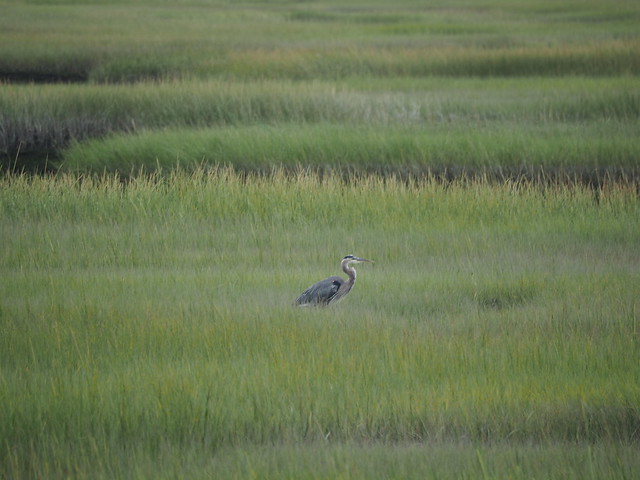
The marsh was loaded with great blue herons, great egrets and snowy egrets. National Geographic level.I’m not, but the way to get better is to practice!
I got one bike ride in with Lotte the Adventure Teckel and during the ride managed to snap a photo of a gorgeous teardrop trailer that I’d been ogling for days. The sailboat reminds me of a Stone Horse – it isn’t a variant, as far as I can tell, but the flush cockpit sure calls that design out. Figuring out the name of the craft, Ataraxia, led to a shallow dive into epicureanism. It’s good to be curious,
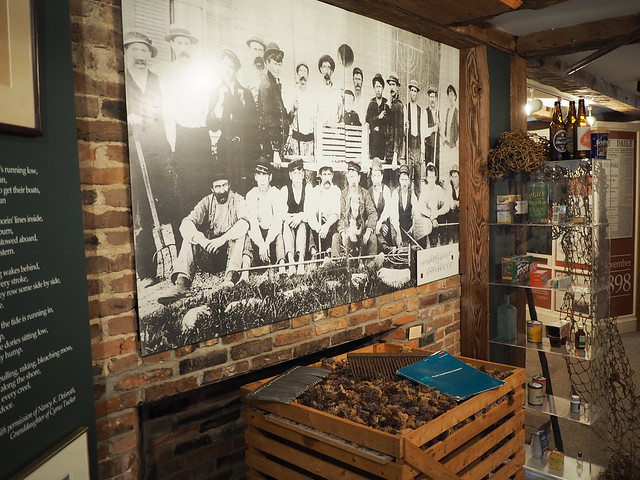
On Sunday, K and I went to the Maritime and Irish Mossing Museum; Scituate had (has?) a small industry devoted to harvesting and drying Chondrus crispus as a source of the thickener carrageenan. A small and charming museum that is only open on Sunday afternoons – worth a stop if the timing works for you.
* Big Electronic Human Energized Machine, Only Too Heavy
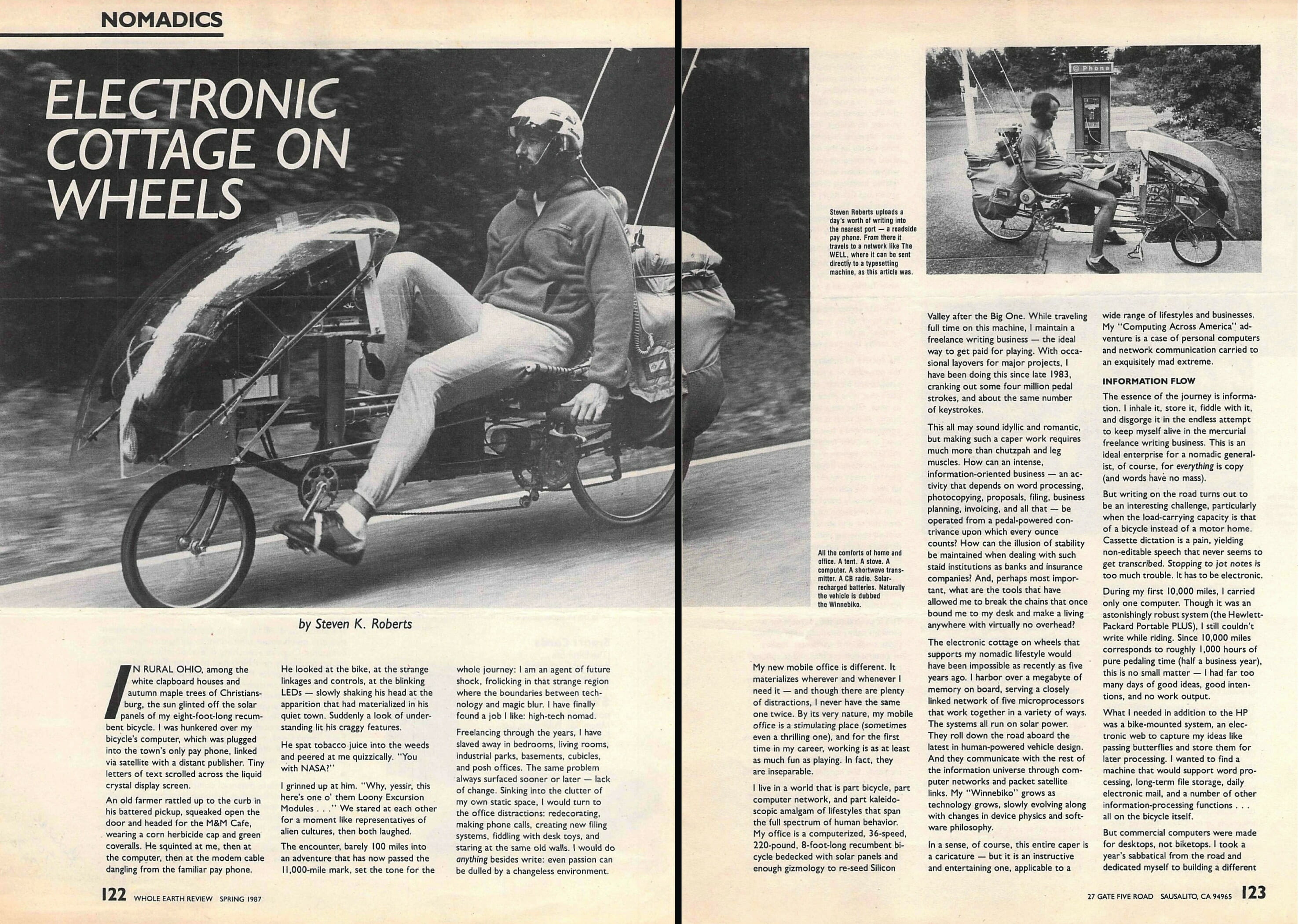
I was wandering around the yard with the dogs this morning, messing around with my phone: taking some pix, catching a Pokémon or 2, texting my dóttir, when I had a sudden contrast-and-compare flashback. I’m taking a few devices with me on the big bike ride, primarily for convenience’s sake, but if I wanted to go minimal, I could manage with one gadget – that selfsame phone. It’s got 2 ways to connect to the internet, GPS, 2 cameras that will do stills and video, a bucket of storage, etc., etc. The flash I had in the yard took me back to a bike project from Olden Tymes: Steven K. Roberts’ Winnebiko, Winnebiko II and BEHEMOTH. All three were (successful) attempts to stay connected while pedaling around in the 1980s. My guess is that I first encountered Mr. Roberts’ project in the pages of Whole Earth Review, a publication that bridged what I’ve come to think of as the paper hippie internet, The Whole Earth Catalog, and the the real capital I Internet. The ’80’s were full of transitional critters – the WER in print and Compuserve. GEnie, AOL, and bulletin board systems in the on-line world (for those of us – the vast majority – who did not have access to the Internet). Steven’s technomadic hallucigenia bikes fit perfectly into the Cambrian-explosion 1980’s networking stew.
Unsurprisingly, the connected bike idea was catnip to yours truly and I kept an eye on the projects as best I could. It really was a different world – doing a search and pulling up all the info I would need for a post like this, let alone the ability to blog as I’m doing now, were years down the pike.
So we come to BEHEMOTH. a second system effect instantiated in a 3rd system. Five hundred and eighty pounds, three laptops, a heads-up display and handlebar mounted keypad. I suddenly feel a lot better about the size and weight of Molly Fin plus Lotte, fishing rods, cameras, kite, and other toys.
As far as I can tell, BEHEMOTH didn’t cover a ton of miles – just too big and heavy. Then the Internet and cell phone things happened and I can hold all that capability and more in the palm of my hand. For now, anyway *wry grin*.
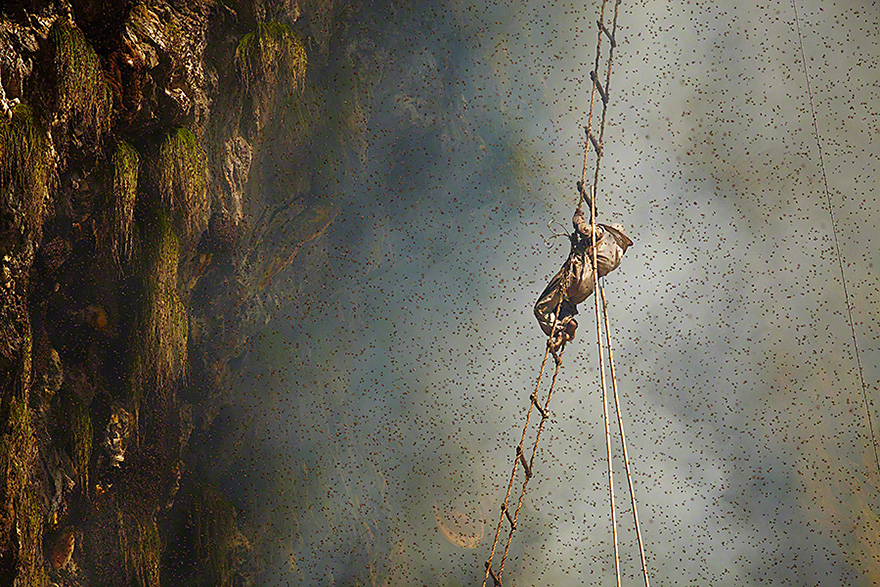
I was sure I’d posted on this topic before, but a search is yielding no joy, so here goes nuthin’. I first ran across ‘mad honey;’, aka deli bal in Turkey, while reading aboutApis dorsata laboriosa– the Himalayan giant honeybee. A few years ago Andrew Newey’s photographs of Gurung honey hunters were everywhere on the internet.
Below is a video from NatGeo of folks from a different group, the Kulung, harvesting honey. I especially like this for two reasons: it’s a 360 degree shot and it breaks the outdoor videographer’s 4th wall – there is a photographer in frame, roped up. I encourage you to watch it full screen and pan liberally.
Many of the posts on the photos noted that springtime honey is psychoactive. It’s because the bees are visiting rhododendrons, and rhododendrons produce grayanotoxins.
Physical symptoms from grayanotoxin poisoning appear after a dose-dependent latent period of several minutes to approximately three hours. The most common clinical symptoms include various cardiovascular effects, nausea and vomiting, and a change in consciousness. The cardiovascular effects may include hypotension (low blood pressure) and various cardiac rhythm disorders such as sinus bradycardia (slow regular heart rhythm), bradyarrhythmia (slow irregular heart rhythm) and partial or complete atrioventricular block.*
Note the mention of low blood pressure. One of mad honey’s uses, at least in Turkey, is to enhance sexual performance. Oh, yes. Turkey… Nepal is one place with rhododendron forests
and the Black Sea coast of Turkey, where Rhododendron ponticum grows, is another. There’s also a very interesting falconry tradition in that area, but that’s for another day.
Why a mad honey post now? I’m re-reading Gore Vidal’s Creation and his narrator, Cyrus Spitama (grandson of Zoroaster), tosses off an offhand comment referencing it.
Mr. Vidal is way more well-read than I, but this reference isn’t a deep dive; there are many classical accounts of mad honey poisoning. My favorite is Xenophon, because it is from the Anabasis, a rippin’ yarn in its own right and the story that The Warriors is based on.
After accomplishing the ascent the Greeks took up quarters in numerous villages, which contained provisions in abundance. Now for the most part there was nothing here which they really found strange; but the swarms of bees in the neighbourhood were numerous, and the soldiers who ate of the honey all went off their heads, and suffered from vomiting and diarrhoea, and not one of them could stand up, but those who had eaten a little were like people exceedingly drunk, while those who had eaten a great deal seemed like crazy, or even, in some cases, dying men. So they lay there in great numbers as though the army had suffered a defeat, and great despondency prevailed. On the next day, however, no one had died, and at approximately the same hour as they had eaten the honey they began to come to their senses; and on the third or fourth day they got up, as if from a drugging. *
I’ll end with a picture of a walk I took with friends almost exactly a year ago from Van Cortland Park to Coney Island, hitting many of the shooting locations that the movie iteration of The Warriors used.
The proximate cause of this post is friend K’s recent re-instagram of Drawn & Quarterly’s book announcement.
https://www.instagram.com/p/BnJuVG4FZBu/
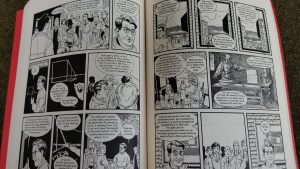
Initially I figured that it was a combined re-issue of books 1 & 2: Berlin: City of Stones and Berlin: City of Smoke. Turns out it’s more than that – the third book in the series, Berlin: City of Light comes out tomorrow as does Berlin (referenced in the instagram) which collects all 3. Even though I should not be buying any additional books *Snake from the Simpsons voice* YOINK! Maybe the Berlin trilogy will live at the Scriptorium for a while… All three books (the 3rd, sight unseen, obv) get my highest possible recommendation.
1 & 2
inside
There are a couple reasons Weimar Germany has been front and center for me. The first and critically important reason is the current political. moment. If a Washingtonian can reassure a federal government employee that a dinner party will be judenfrei… Do I have to diagram it for you? A less world-historically awful reason is a fantastic show – Babylon Berlin on Netflix. I enjoyed the heck out of it. Politics! Drugs! Crime! Sex! Subtitles! Watch it!
[EDITED]*
Babylon Berlin‘s creators have said that part of the appeal of setting a narrative in that particular era is to be able to show that the Nazis didn’t appear in a vacuum. There were forces at work in society that Adolf Hitler effectively tapped into to propel his own vision forward, and show is a good framework in which to let them play out. In fact, you’ll only hear the name Hitler once throughout the 16-episode run (the equivalent of two seasons), but his shadow looms large, namely through a number of language cues that indicate a growing nationalistic base.*
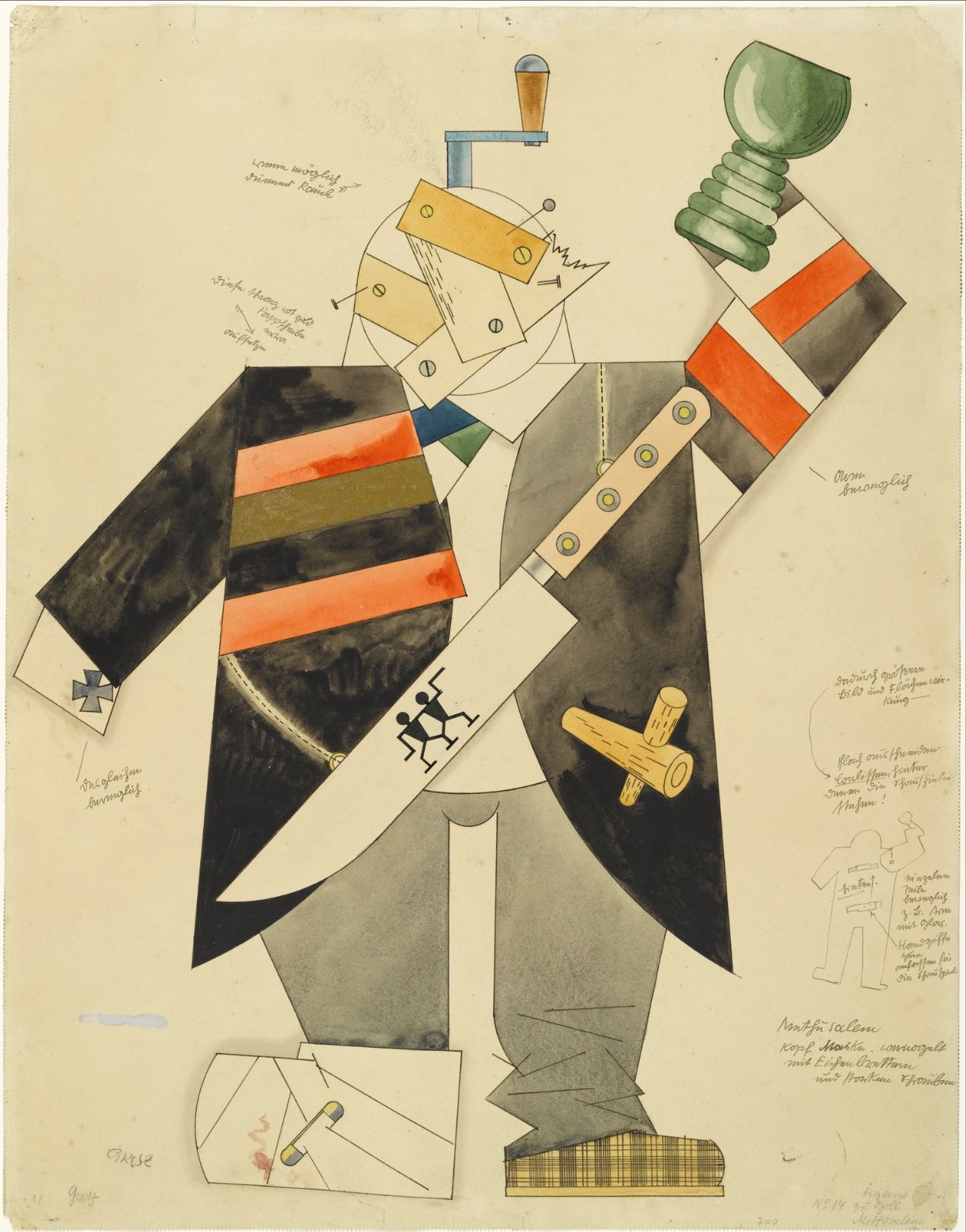
Triple bonus points for a paternoster, by the way. I think I’ll read Lutes’ Berlin trilogy and re-stream Babylon Berlin. And while I’m on the subject, I’ll take the opportunity to post a couple pieces by George Grosz:
Methusalem. Costume design for the play Methusalem (1922)
Daum marries her pedantic automaton George in May 1920, John Heartfield is very glad of it
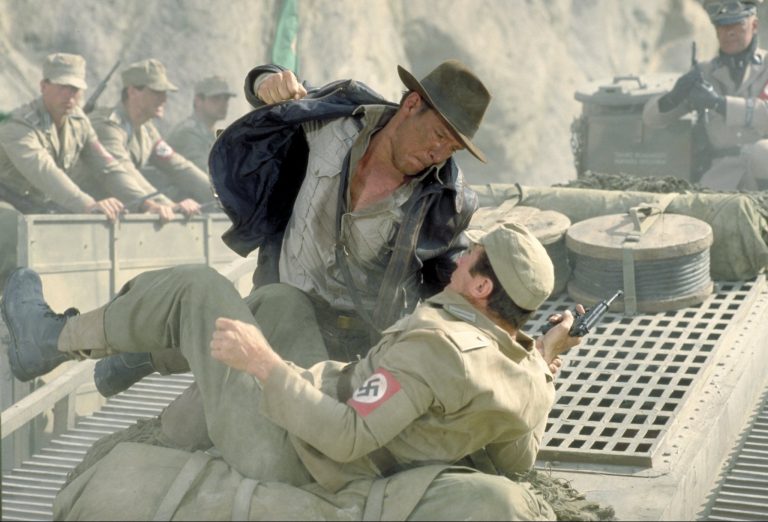
* I removed a link to The New Yorker. As I hit ‘publish’ on this post word came in about an event they’re sponsoring featuring Steve Bannon. Nope. Always. Be. Punching. Nazis.