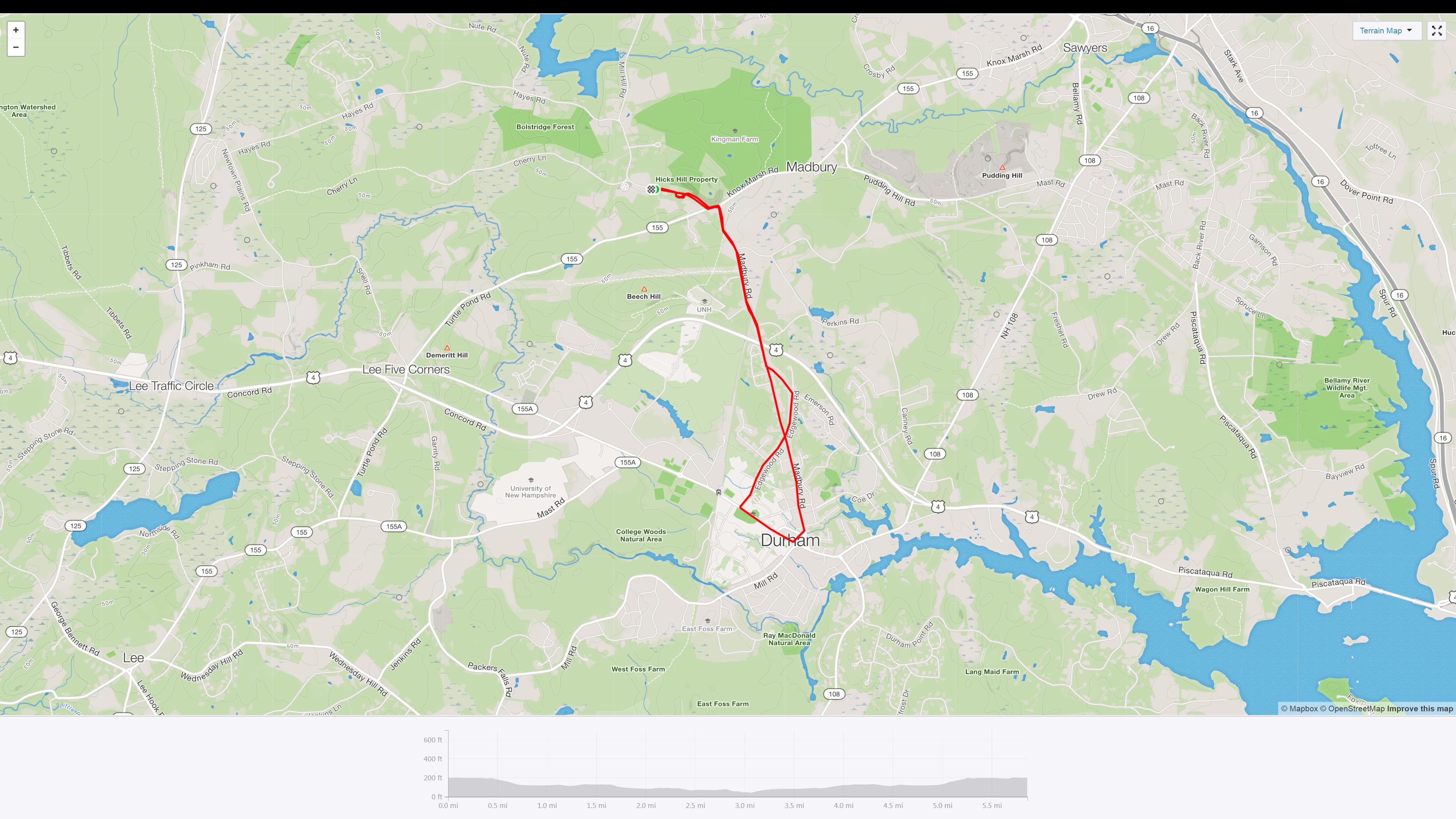
I’m in Mimbres NM for a while and took a ride up the valley to see if the Forest Service had shut off water and power to the campground I’m planning on moving to on Wednesday. I’m happy to report they haven’t; at five bucks a night this is going to be a cheap 10 night stay! Coming back, the morning was so lovely that I saved a couple 30 second clips from the dash cam to share.
Mist in the pines.
*
One state north, this would be called a “park”, as in Winter Park and, yes, South Park. Not sure if there’s a New Mexico specific descriptor.
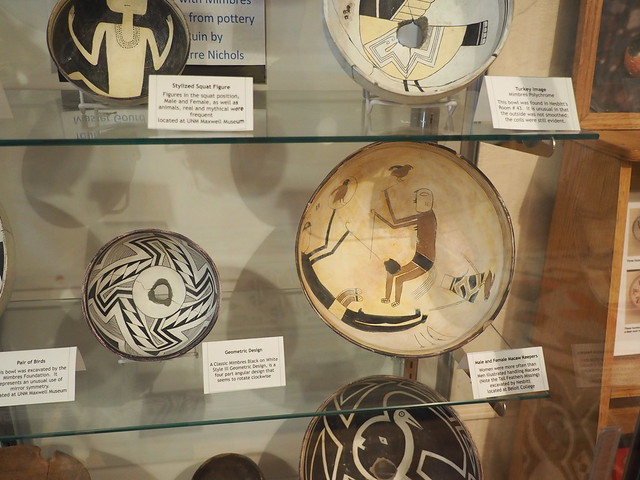
Enlarge the photo and check out the bowl with the macaws and people – note the info on the tag!
The paper argues, well, I’ll let them say it…
Additional points:
given that women are most often depicted handling macaws, was this a woman’s quest to the south?
I was thinking trade routes, but trade – perhaps turquoise for birds or something similar- may not have been the point. It may have been about esoteric knowledge and the birds that symbolized it with nothing given in exchange except religious alleigance.
the Hopi have a story of Tiyo, who journeyed south and returned with ritual knowledge of the Snake Dance – another case of ‘listen to what the people tell you about their history’?
I’n going to keep investigating , but this is exciting stuff! And for those who didn’t recognize it immediately, the title is a riff on Journey to the West. “The novel is an extended account of the legendary pilgrimage of the Tang dynasty Buddhist monk Xuanzang who traveled to the “Western Regions”, that is, Central Asia and India, to obtain Buddhist sacred texts (sutras) and returned after many trials and much suffering.”* Appropriate, I think.
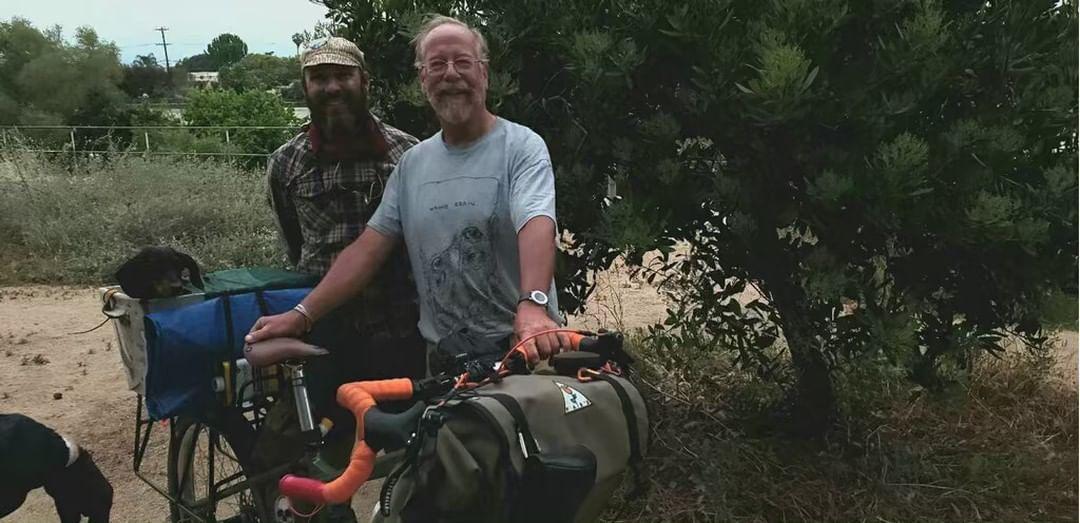
I first had coffee outside with the L.A. River Camp Coffee crew a couple years ago while out on a visit and doing it again was a priority this time, given that I’d legit biked into town. By way of explanation, LARCC is an informal group of cyclists, organized originally by Errin Vasquez, who meet at a small park on the L.A. River bike path to brew coffee and shoot the breeze – my kind of group! First thing Wednesday morning, I put Lotte in her basket and pedaled 5 miles north to meet the group. It was – no surprise – a ton of fun and there was lots of interesting bike talk.
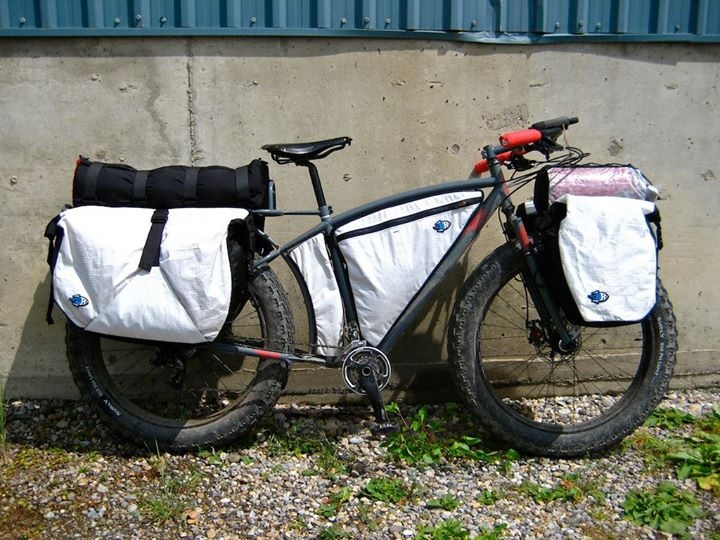
Errin and I were talking about Molly Fin (the bike) and frame materials; I said something about a steel mid-tail being a dream machine and he filled me in on the ur-midtail – the bike that inspired the Salsa Blackborow. In 2013, Rick Hunter built a bike for Scott Felter (bagmaker/Porcelain Rocket). Not just any bike, obviously, but a mid-tail fat bike for a ride along Austrailia’s Canning Stock Route. More on the route in a minute, but check out this bike!!!!
Lots of cargo capacity, not because Scott planned to take an #adventureteckel with him, but because the route requires that folks ride with 30-35 days of food and 4-5 days of water. If you want to read about the ride, Tom Walwyn’s blog is the place to start; he has a great Flickr album, too.
I’d never heard of the Canning Stock Route, so I googled it up. It’s clearly a tangent I’m going to spend some time reading about. I’ll quote from Wikipedia:
The Canning Stock Route is a track that runs from Halls Creek in the Kimberley region of Western Australia to Wiluna in the mid-west region. With a total distance of around 1,850 km (1,150 mi) it is the longest historic stock route in the world.
The stock route was proposed as a way of breaking a monopoly that west Kimberley cattlemen had on the beef trade at the beginning of the 20th century. In 1906, the Government of Western Australia appointed Alfred Canning to survey the route. When the survey party returned to Perth, Canning’s treatment of Aboriginal guides came under scrutiny leading to a Royal Commission. Canning had been organising Aboriginal hunts to show the explorer where the waterholes were. Despite condemning Canning’s methods, the Royal Commission, after the Lord Mayor of Perth, Alexander Forrest had appeared as a witness for Canning, exonerated Canning and his men of all charges. The cook who made the complaints was dismissed and Canning was sent back to finish the job.
I’m especially interested in the Royal Commission and the cook, Edward Blake. I wonder if my initial take – that for things to have risen to Royal Commission level, the accusations were serious – is indeed correct. I’ve got no background in Australian history, so no context to judge against; looks like an opportunity for me to learn. Thank you, Errin, for exciting my curiosity!
Antarctica again: a post from Barry Lopez talking about his time on a blue ice field with a field team collecting meteorites. A lot of things to love about this – space, ice, people cooperating in a tough environment, nunataks, and a mix of cutting edge and traditional technologies.
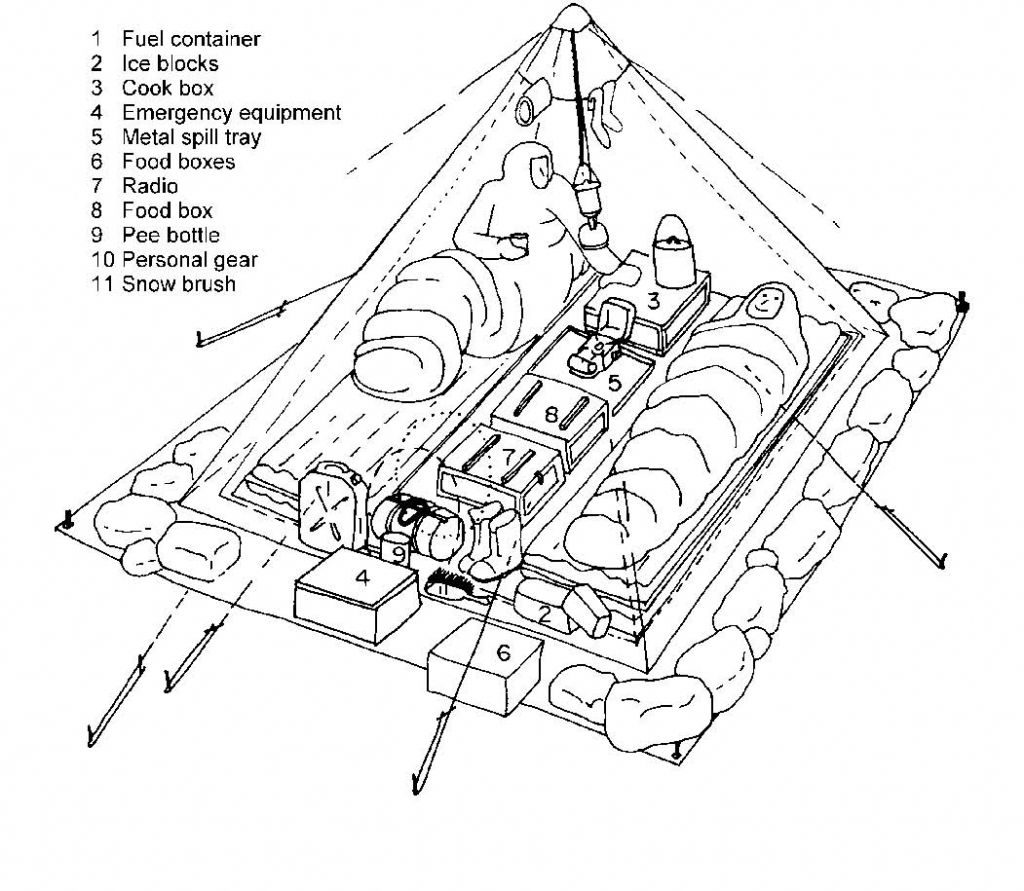
John and I share an appetite for physical engagement with the world of snow, ice, and rock beyond our tent, and we appreciate having an opportunity to work together, almost always in silence. We’re comfortable being confined in the limited space of a Scott tent. We split the cooking chores easily, and we observe the same unwritten rules that ensure each person a bit of privacy. I like the rhythm of our daily problem-solving and the hours of stories and reminiscence we share in the tent on storm-bound days, the physical and technical challenge of the work the six of us do, and the deep sleep that comes with exhaustion. Humans, I think, were built for this. We can do it superbly.*
Read the whole thing, as they say. Additionally, some of the tech tangents I zoomed off on…
de Havilland forever! I’ve flown on a radial engine Beaver; no Twin Otter, yet.
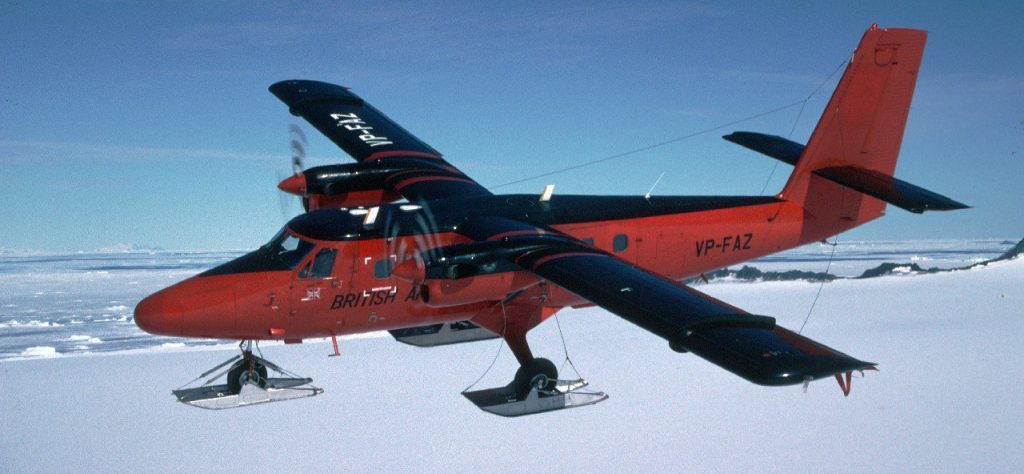
Three years before we arrived, four scientists, the first people to visit this part of Antarctica, landed nearby in a Twin Otter plane.
BAS Twin Otter
Scott pyramid tents count as middle-aged tech, I think. Though most of Scott’s experiments were a bust, the tent endures.
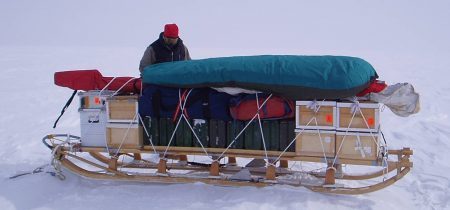
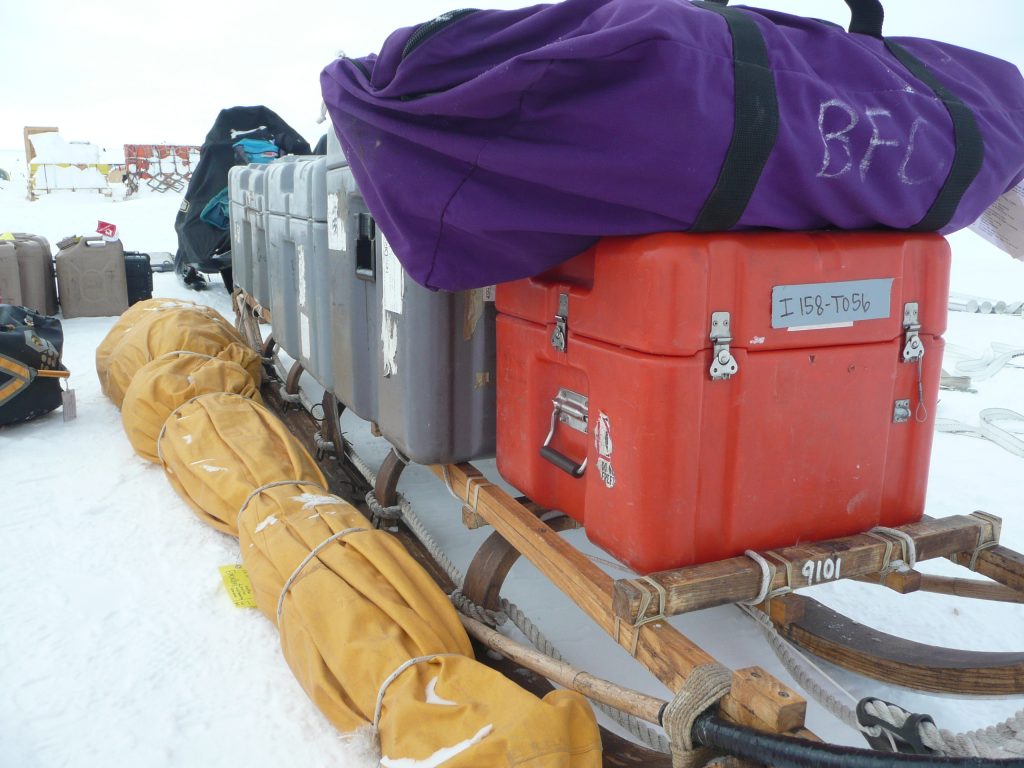
Nansen sleds! Designed in the 1890s, adapted from traditional Inuit qamutiiks. Lashed, not nailed, so they flex on uneven terrain. Lights up a bunch of my pleasure centers.
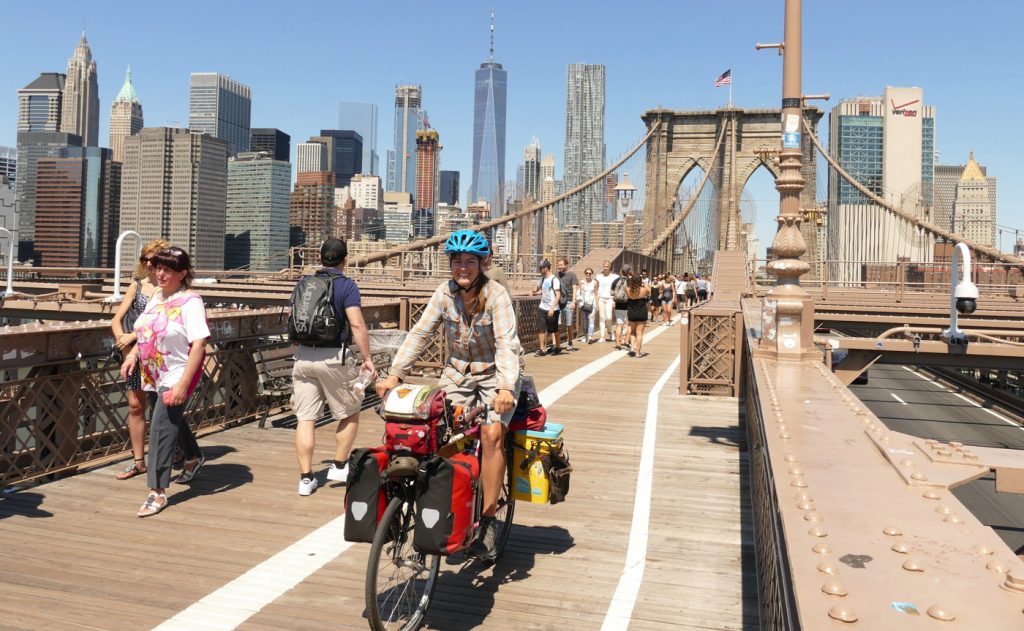
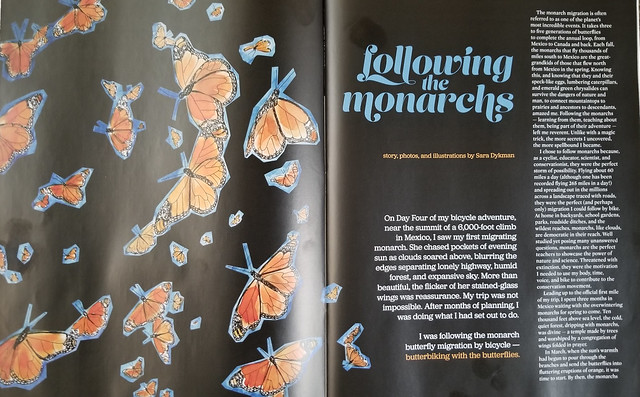
The Adventure Cycling Assoc. posted “Following the Monarchs” (referenced in the post below) to their website. Now you can read the whole thing and not rely on my photo! Side note: dirtbag panniers 4evah!
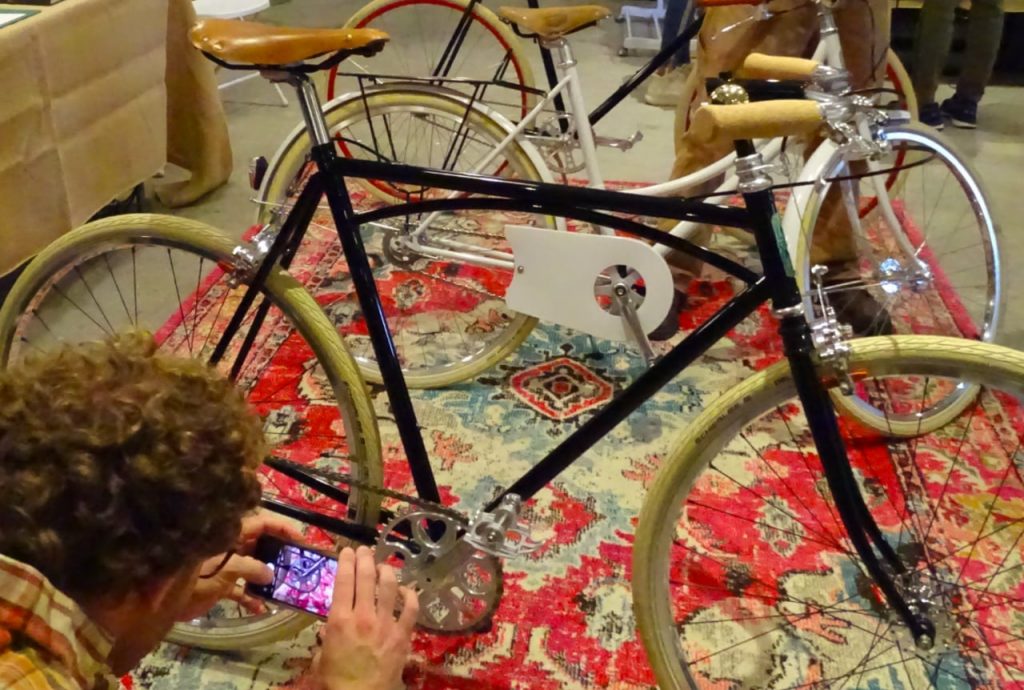
Handbuilt Bike news has coverage of the New England builder’s Ball (Two Wheels X 2). They did a much more complete job than my ‘ooh shiny’ reportage. Part 1, Part 2 and Part 3. Below is a photo I should have taken – I really liked this ANT rig.
The migration south is still going strong here in southern NH, so monarchs have been much on my mind. The starting point was finding what I think was a freshly emerged female in the back yard a few weeks ago. I’m sure she would have been fine, but I moved her to a protected perch on the breezeway to rest and warm up a bit.
Then the Oct/Nov edition of Adventure Cyclist arrived. It’s the house organ of the Adventure Cycling Assoc. – a great group that’s created some amazing route maps. The cover story was Sara Dykman’s 10,000 mile ride following the multi generation migration from Mexico to Canada and back. Naturally, I’m wondering if I should swing south after either Baja or Barrancas del Cobre. Hmm.
Ms. Dykman’s web site is here and I’ve embedded a map of her route below. A dang cool ride, I must say.
From ButterBikes to Butter-Gliders – shifting gears a bit, the Venture Bros. are back on teevee, For those who don’t know the show, one of the main characters is a supervillian called The Monarch (née Malcolm Fitzcarraldo). The new run – Season 7 – is superb and gets a strong recommendation. The AVClub has a TV Club 10 post with ten essential episodes; let me quote the intro to give those of you unfamiliar with the show a sense of what it’s all about.
When it started, The Venture Bros. was an unsubtle parody of Jonny Quest, centering on a super-scientist, a burly bodyguard, and a couple of rambunctious teens who love a good adventure but are also just a hair too naïve to really survive for long on their own. Calling it a Jonny Quest parody now is almost comically reductive, though, because the show spent its first six seasons expanding into one of the most complex and bizarre universes of any animated series—including its newer Adult Swim contemporaries like Rick And Morty. It’s a superhero parody, with deep Marvel cuts that have become a lot less deep thanks to the movies. It’s an outlet for obscure musical references, where David Bowie somehow became a regular character until creators Jackson Publick and Doc Hammer decided that was too limiting and just made him into a shapeshifter who pretended to be David Bowie. It’s a G.I. Joe parody, where the good guys and bad guys all need a silly gimmick and a codename. Mostly, though, it’s about a family that always sticks together, even in the face of constant, inescapable failure.
That’s the word that always comes up when trying to describe The Venture Bros., but even saying it’s a show about failure is reductive. That reading doesn’t take into account how the characters have grown and changed over the years or how they sometimes completely stumble into success. Really, if you want to cleverly say that the show is about any one thing, then it’s about subverting expectations. The show knows what people like and what they’ll want to see, and then it goes off in a different direction that deepens the characters in an unexpected way or throws a needlessly complicated wrench into a plot that is already needlessly complicated (or maybe it pulls the wrench out and lets a complicated plot run down to something more simple).
From an earlier season, DRAMA!
And back to the real thing – while out for training rides with Lotte the Adventure Teckel, I’ve come across monarchs that are sure to be squashed by traffic unless they’re moved. So I move them. There have only been a few, but with the world in the state that it’s in, every one is worth an effort.
Anyone who knows me, knows that I love two wheeled vehicles. My own riding has been restricted to bicycles for a long time, but I love looking at a nice motorcycle too. The presence of an engine gives builders freedom to be less minimalist and practical – expressed esp in the world of choppers. Last Saturday there were two bike shows: the Welcome East motorcycle show in Portsmouth NH and The Builder’s Ball handmade bicycle show in Boston. I spent time at both as I made my way back to Scituate.
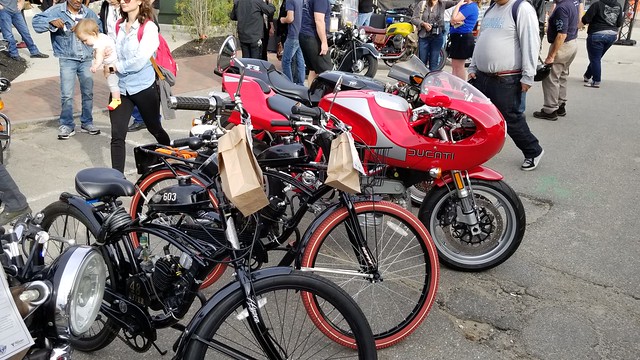
There was an an amazing range of bikes at the Welcome East show; a diversity that led to my favorite juxtaposition of the day: two bike conversions next to two superbikes.
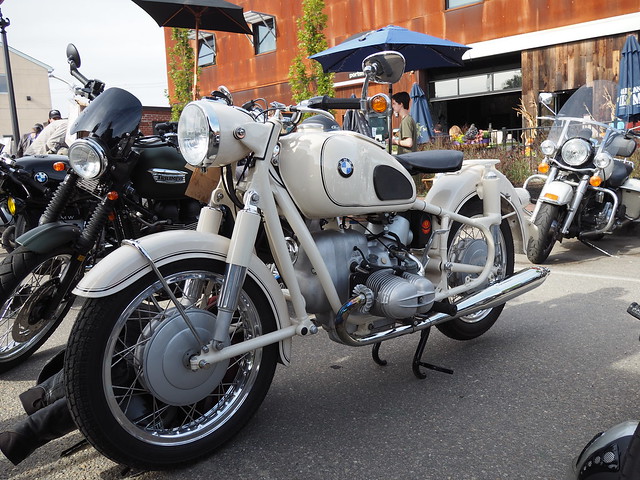
My favorite was this perfect BMW. I am a sucker for Earles forks.
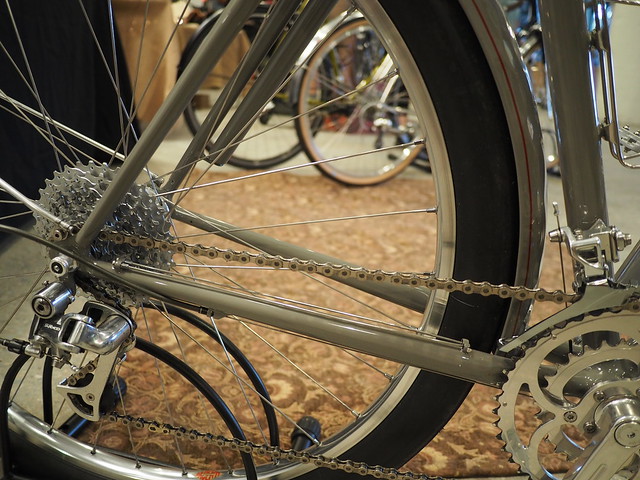
The Builder’s Ball was smaller but in some ways even more amazing. The attention to detail was incredible. Brian Chapman used spare spokes as chain slap protectors:
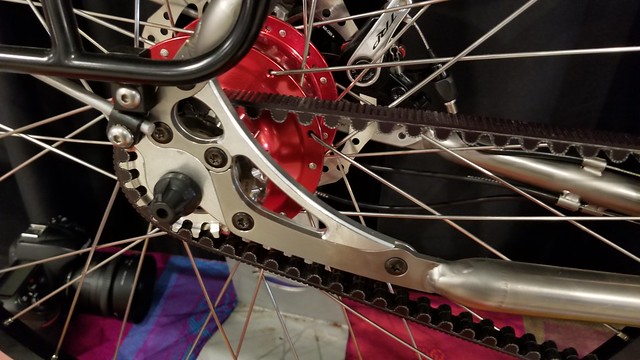
Bilenky Cycle Works fabricated a gorgeous rear dropout to accommodate a Gates belt drive:
There needs to be a break point in the drive side rear triangle of Gates-equipped bikes so that the belt can be threaded into place. I’ve never seen the problem handled so elegantly.
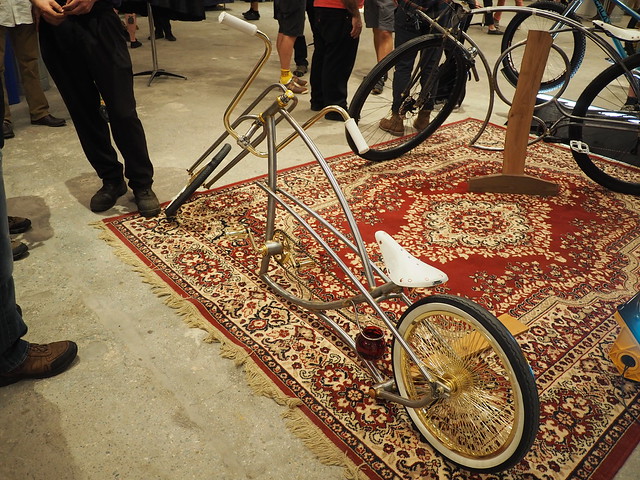
There was also space for less Apollonian stuff. A bike chopper with what I assume is a combination running light and butt warmer:
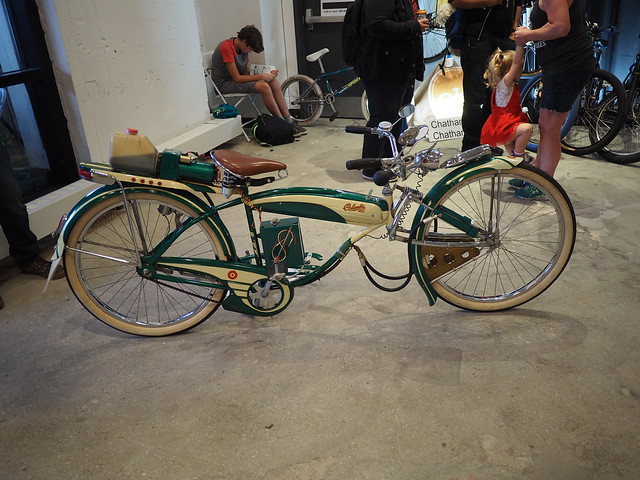
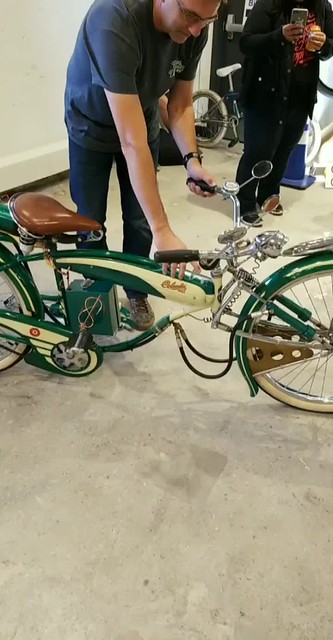
And this amazing machine:
I thought at first that it was some sort of e-bike conversion. And then realization dawned: hydraulics! The owner was given the bike by its creator, a Worcester machinist, as he was heading off to a retirement home. The current owner has had the bike for two decades and it is still immaculate. I’d hang it on a wall if I owned it – art.
Locally, preparations for my bike trip continue. Today’s task is choosing books that will live at the Scriptorium in Breuklyn – Lotte and I are heading south tomorrow to celebrate my b-day with friends and fam!
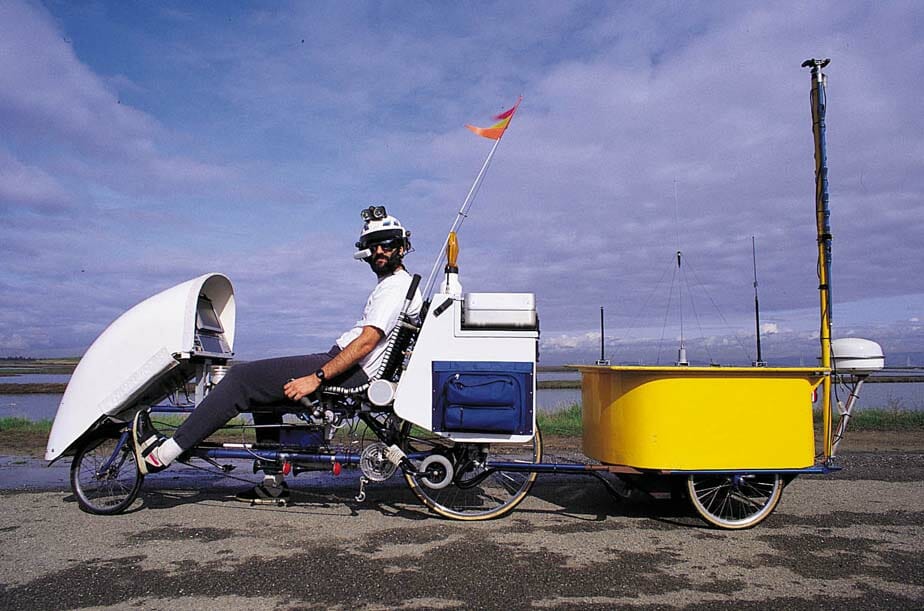
* Big Electronic Human Energized Machine, Only Too Heavy
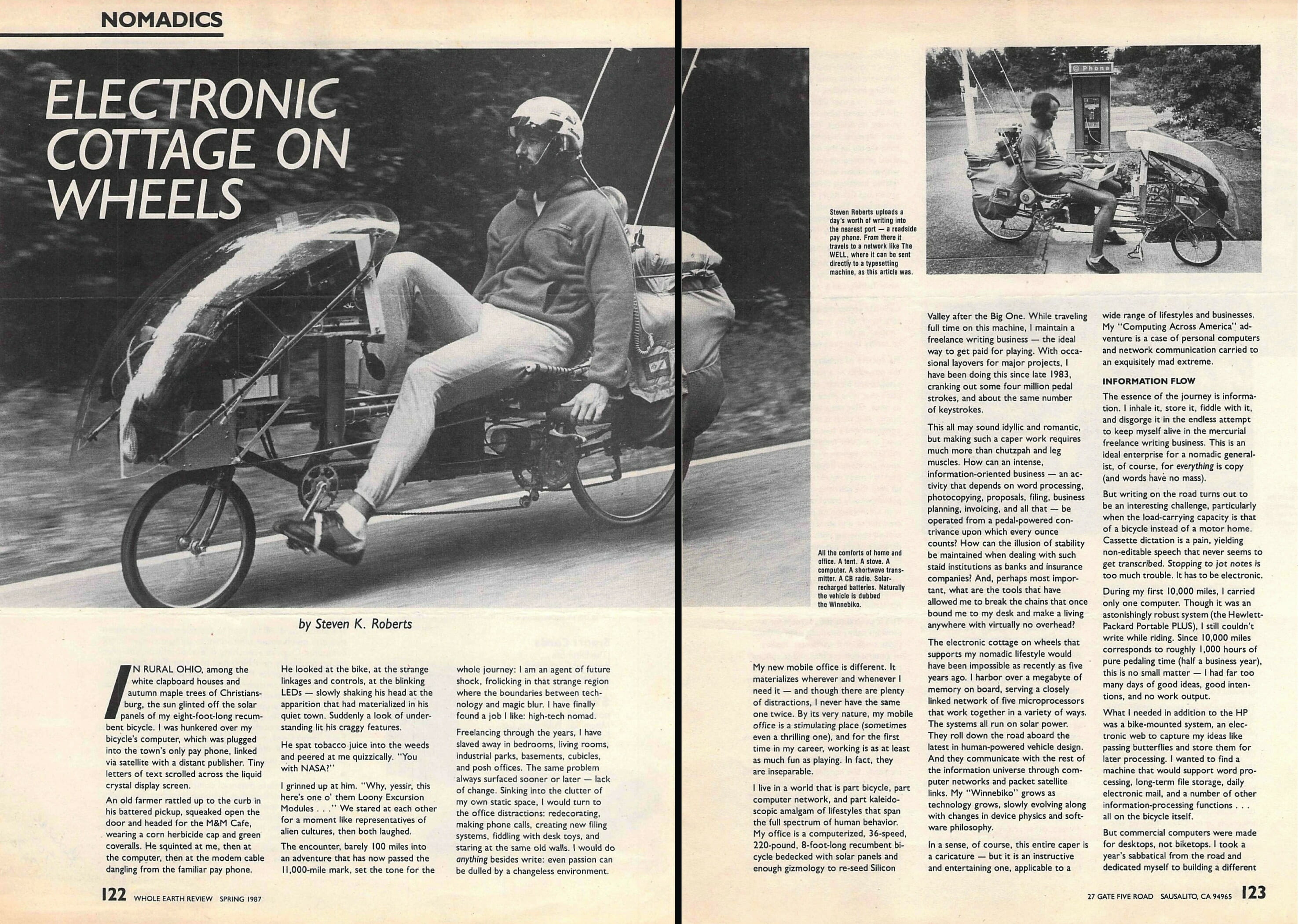
I was wandering around the yard with the dogs this morning, messing around with my phone: taking some pix, catching a Pokémon or 2, texting my dóttir, when I had a sudden contrast-and-compare flashback. I’m taking a few devices with me on the big bike ride, primarily for convenience’s sake, but if I wanted to go minimal, I could manage with one gadget – that selfsame phone. It’s got 2 ways to connect to the internet, GPS, 2 cameras that will do stills and video, a bucket of storage, etc., etc. The flash I had in the yard took me back to a bike project from Olden Tymes: Steven K. Roberts’ Winnebiko, Winnebiko II and BEHEMOTH. All three were (successful) attempts to stay connected while pedaling around in the 1980s. My guess is that I first encountered Mr. Roberts’ project in the pages of Whole Earth Review, a publication that bridged what I’ve come to think of as the paper hippie internet, The Whole Earth Catalog, and the the real capital I Internet. The ’80’s were full of transitional critters – the WER in print and Compuserve. GEnie, AOL, and bulletin board systems in the on-line world (for those of us – the vast majority – who did not have access to the Internet). Steven’s technomadic hallucigenia bikes fit perfectly into the Cambrian-explosion 1980’s networking stew.
Unsurprisingly, the connected bike idea was catnip to yours truly and I kept an eye on the projects as best I could. It really was a different world – doing a search and pulling up all the info I would need for a post like this, let alone the ability to blog as I’m doing now, were years down the pike.
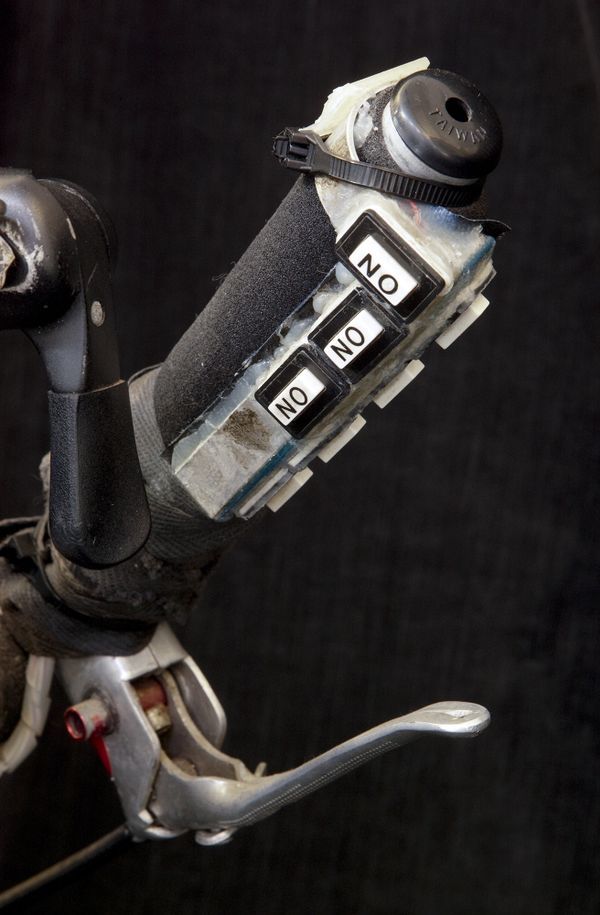
So we come to BEHEMOTH. a second system effect instantiated in a 3rd system. Five hundred and eighty pounds, three laptops, a heads-up display and handlebar mounted keypad. I suddenly feel a lot better about the size and weight of Molly Fin plus Lotte, fishing rods, cameras, kite, and other toys.
As far as I can tell, BEHEMOTH didn’t cover a ton of miles – just too big and heavy. Then the Internet and cell phone things happened and I can hold all that capability and more in the palm of my hand. For now, anyway *wry grin*.
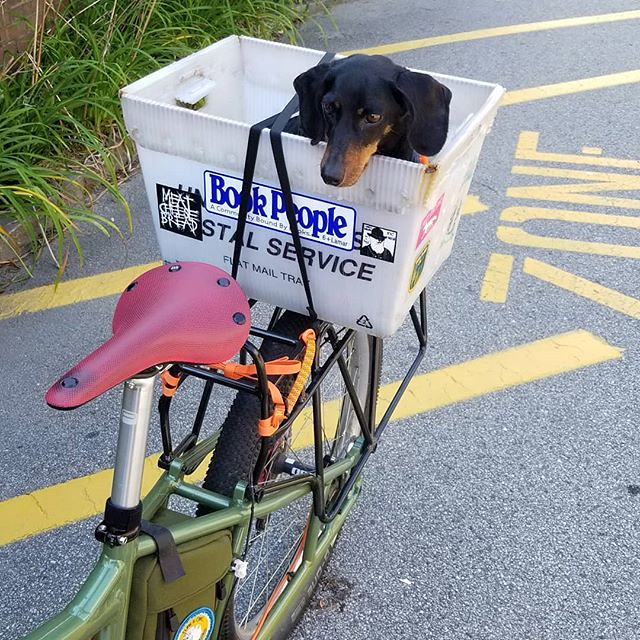
Lotte’s first real outing was an unqualified success. Looks like all training rides from here on out will have a #carrypupolympics leg at the very least.
One of the sub-projects that I have had on *simmer* for a while is rigging a crate or basket for my cycling companion – Lotte the Wonder Teckel. I like mulling over projects for a while; though I’m not averse to trying an approach, failing, and trying a different tack, too many iterations frustrate me. But – it’s time to get Lotte on the bike. I did a little shopping for crates – her crate is just too heavy – no joy.I have a coroplast tote that I’d been eyeing as a potential dog basket; I strapped it to the rack and went for a test ride. It was obvious off the bat that my first guess on orientation – long axis of the tote parallel with the long axis of the bike – wouldn’t do, so mid-ride I adjusted it to ride cross-ways. To keep it from nudging my butt, I moved it back a bit and tried loading the tent in front of the basket and the much lighter sleeping pad behind. Success! The rack has 6 tapped holes so one can bolt stuff to the deck. I used 1 pair and added 4 re-usable zipties.
I put a U-bolt in. centered in the basket, and cut up some closed cell foam to pad the bottom. Time for a test ride with a gallon of water filling in for Lotte. I am going to be the anti-shred on this ride: I don’t want to deal with busting myself up and I certainly do not want to make L uncomfortable, let alone put her in harm’s way. I figured if I could keep the gallon jug upright and in place (not sliding around), I’d be in good shape. It did fall over twice, but both times were during mount/dismount efforts. Acceptable.
On the doggo side a harness was needed. Lotte will be leashed into the basket and a collar will not do. I wanted a harness with attachment points both top (walking on leash) and bottom (secured in basket) and couldn’t find anything that would suit locally. Off to the internet! While we waited for delivery, we did a few ‘sit in the basket/get plied with treats/ear skritches’ sessions. Time well spent.
The harness came today. I fitted it to her and let her wander around the house – NBD. So we went for a walk. She didn’t care.
Moment of truth! I got a pocket full of treats and put Molly Fin in a shady spot, scooped up Lotte and leashed her into the basket, fed her a couple treats and took the bike off her kickstand.
[side note/a bit of my dog training philosophy: quit while you are succeeding! Too often, the two-legger gets all “I want one more repetition!” and keeps going until the dog stops cooperating (out of boredom or fatigue or sheer cussedness) and then one is faced with ending on failure or pushing through and forcing the issue. Neither is as good as, “Yes! Excellent job pup! We’re done now, let’s goof around!!” So I was ready to pull the ripcord at the first sign of Lotte not having fun from this point on.]
I pushed the bike down the road a couple hundred feet, watching Lotte like a hawk the whole time, until I got to the back entrance to the elementary school next door. She was still happy and curious. I threw a leg over the bike, looked back at her (still fine) and started pedaling. Woohoo! We spent 10 minutes or so in parking lots and on paved paths, then I did pull the plug. Back home – and I acted like this was something we’d always done, even though, internally, I was over the moon. Now, we just need to take it slow and keep it fun…
![GRMN-2022-12-05_08-52-21-exportedVideo[1]](https://live.staticflickr.com/31337/52544293477_8f50d6d57f_z.jpg)
![GRMN-2022-12-05_08-50-28-exportedVideo[1]](https://live.staticflickr.com/31337/52545438163_8802304ea7_z.jpg)