Got a Match?

Special God’s Holy Trousers Edition

*

Two empires meet in one of the most interesting places on the planet.

*

First up – and oldest – the kukri. I first encountered this knife in the classified ads of Field and Stream, Outdoor Life, etc. back in the days when the ads also featured squirrel monkeys (I wish I could remember the name of one importer – I had a price list – their motto was “xx years in the monkey business”) and get rich quick chinchilla ranching schemes. In spite of that somewhat inauspicious intro the kukri immediately took it’s place in my little pantheon of cool edged tools and never left.

*

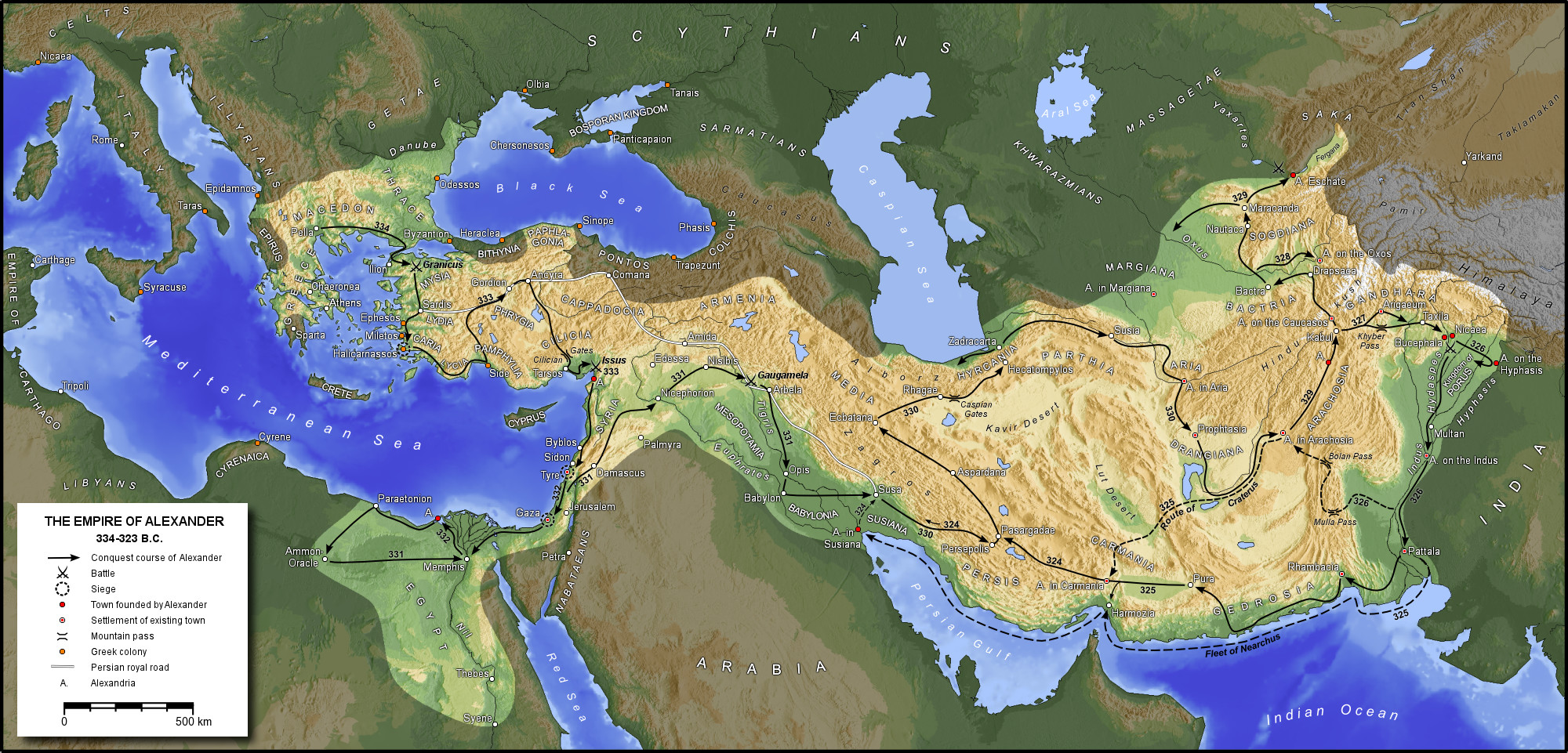
The origin of the kukri is open to debate – my favorite theory is that Alexander the Great brought it east (the kopis) when he invaded India. Tying Alexander’s empire to a more recent one are, of course, the Gurkhas. A more indirect link to someone of note – the kukri is also common in Kumaon – Corbett, anyone?

What to match the kukri with? The Martini-Henry rifle is one candidate, but I’m going with something that could hang on a web belt near the knife – the Webley Revolver. More even than the Martini, the Webley, in a service holster with a lanyard round the officer’s neck, is for me the essence of British colonial militaria.

*

There you have it – Alexander and Victoria meet in northern India and Nepal as Daniel and Peachie are tromping through the Khyber pass on their way to Kafiristan. A picture from much later showing a Gurkha paratrooper kitted out with what I’m assuming is a Webley – the kukri is there – you just can’t see it.
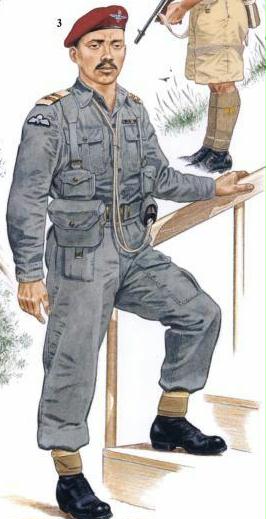
gurkha1

*

Fun fact – the pistol Sean Connery carries in his finest film role – as Zed – is a Webley-Fosbery Automatic Revolver (automatic revolvers are, IMHO, a solution in search of a problem, but interesting nevertheless).
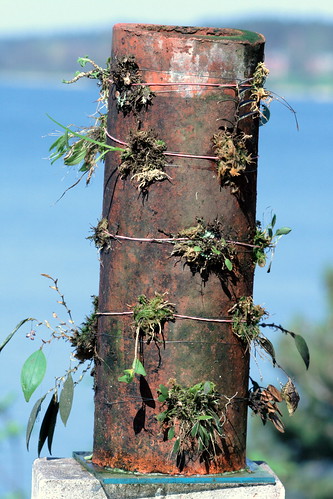
Orchid nano-viv

A great Flickr find – a couple days ago Karlboms orchids favorited a picture of mine; as I usually do, I backtracked to see what sort of things they are up to. Jackpot! Aside from being the EpiWeb people (a material that’s generated a lot of discussion in the dart frog community) they are also doing some amazing things with small vivaria for orchids. I’ve put the following together by running down various threads on the Orchid Source forum.

The core (literally and figuratively) of the setup is a terracotta drain pipe.

*

A sheet of glass is siliconed to the bottom, the pipe is filled with water, a piece of EpiWeb is used as a cork (to keep the water in the pipe from becoming algae-choked) and in the latest incarnation a piece of rubber cord is wrapped around the pipe to secure specimens.

*

An obvious warning – rainwater or RO water only – and a less obvious one – fertilize from the outside only.

As Ron Popeil would say, “But wait! There’s more!” Mikael encloses the pipes in lexan tubes.

*

On the first picture you see the top of the lid on the nanoviv. I have cut out a piece of the glass to allow air to pass out.
Under the glass you can see the PC fan that circulates air inside the cover.
The light set-up is made by using 12V halogen lamps that sits on a metal strip that is covered with copper foil. The lamps is attached to and connected to the “rail” by very strong neodym magnets. This allows me to move the lamps freely and makes a minimal fixture.

nanotop1

*

Here you can see the way I mount the fan. By using neodym magnet (one on each side of the cover)I can set the fan in all directions without destroying the plastic. (this fan is from another vivarium). I use fans that are only 40×40 mm.

nanofan

*

Really amazing stuff – you can see the entire nano-viv Flickrset by clicking on the picture below.

Status update

Some of you may have noticed that the blog has been doing a bit of time travelling – first back to the beginning of December and then to January 10. I think we’re resynchronized, time/space-wise – sorry for any confusion.