Kite Aerial Photography

I’ve been interested in kite aerial photography almost as long as I’ve been on the internet. I’m not sure how I got there, but I remember falling over Prof. Benton’s KAP page back in the days of usenet and listservs. I’ve flown a couple different kinds of drones, but the notion of a kite as the camera’s skyhook never stopped being attractive. As I thought about camera equipment for the trip, a KAP rig immediately suggested itself. Drones are heavy and power hungry; kites are neither of those things. I got the stuff together and yesterday – a day of 20 mph+ blustery winds – was the first sky trial.

KAP requires 3 things: a kite (and line obv), a camera with some sort of automatic or remote triggering capability, and a way of hanging the camera off the kite string. I already had a GoPro; they come with wireless capabilities and a phone app to control them. The kite was easy, too. Though I already had an old parafoil kite, I ordered a larger one (for better light wind lifting) with a monster tail (for stability). The last bit, the camera/kite interface, is interesting. I’m using a picavet (or picavet cross if you prefer). It’s named after its inventor, Pierre Picavet, who came up with the notion in 1912. Side note: the history and longevity of KAP is another thing that attracts me.

Labruguière photographed by Arthur Batut's kite in 1889.jpgArthur Batut’s aerial photo of Labruguière, 1889

Here’s my picavet on its way up:
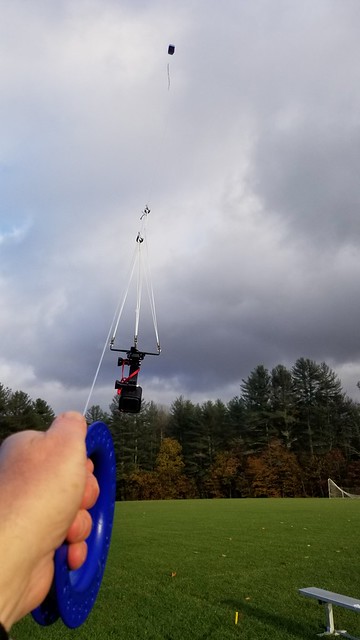
Picavet.

But I am getting ahead of myself. Yesterday was the first day that all the elements were in place: good wind, no rain and all the components rigged and ready. So off I went to a nearby (sodden) playing field complex. When I got there, I discovered that I wasn’t the only person with kites on their mind. This person was doing some dry land kite-boarding practice.

kiteboard

We spoke briefly – I wanted to make sure I didn’t get in his way – and I walked off to a different corner of the field. He left soon after; the wind was strong and out of the corner of my eye I saw him execute a nice landing after getting pulled a combined Olympic long/high jump distance by his kite.

I had a good time and came away having learned a few things: a mark of a successful outing in my book.

  • Wear gloves!
  • I need to spend more time with the GoPro phone interface. The interface is simple, but when you’re using it one handed with an angry kite in the other hand, well… And distance may or may not be an issue – again, tough to troubleshoot when one’s attention is divided.
  • I am going to experiment with more and heavier line. The kite came with a 300′ spool of 80lb line. I have a 500′ spool of 160lb line – it weighs more (boo!) but the extra 200′ will come in handy.
  • Don’t expect stable video when you are flying in a wind right at the top of your kite’s rating.

Here’s some barely-edited footage of the first flight; not great but there’s nowhere to go from here but… wait for it… up.
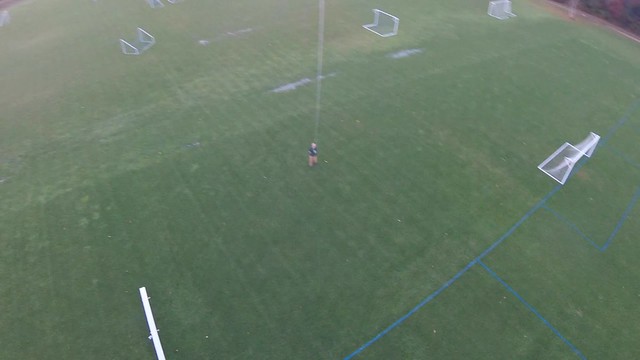
First flight.

Logistics note: I’m planning on posting video to both Flickr (esp after they open up the time limit to 10 minutes) and Youtube. I realize there’s angst on the internet over how SmugMug/Flickr is handling the free account downgrade. I’ve had a Flickr Pro account for a long time for exactly that reason: lack of trust in the permanence of free internet services. And so the thing I pay for (Flickr) will be the primary drop and the “free” thing (Youtube) will be there as a secondary source.

Sub-miniature Graboid

Via Tetzoo, a critter that I would love to see on the the Big Bike Ride! Dr. Naish’s post is on speculative, “could yet be discovered” animals that are not already cryptozoological cliches – so no Nessie. The whole thing is a lot of fun but the entry for “A gigantic, predatory, limbed amphisbaenian” really caught my attention.

Among the weirdest of amphisbaenians are the ajolotes (or bipedids), the only extant group to possess limbs. These limbs are not small stumps or flaps (as they are in some other near-limbless, serpentine squamates) but well-developed, clawed forelimbs. According to some phylogenetic models, ajolotes are not the sister-group to limbless amphisbaenians but deeply nested within the limbless clade (Conrad 2008, Videl et al. 2008), in which case their limbedness – if you will – perhaps evolved from limbless ancestors. Add to this the fact that some amphisbaenians are robust-jawed, short-faced predators of vertebrates that ambush prey from beneath the surface and bite chunks from the bodies of surface-dwelling mammals and reptiles.

[…]

So then… where oh where are the giant, limbed, robust-skulled, vertebrate-eating amphisbaenians? By ‘giant’, I am not talking about a graboid-sized monster of several metres (though that would be nice), but a more reasonable animal of a mere 1.5 metres or so. Easily the stuff of nightmares. They could inhabit warm regions of any continent.

So what’re these ajolores? The word references 2 very different animals: the axolotl of Lake Xochimilco (endangered in the wild) and the Mexican mole lizard of Baja California – obv it’s the latter we’re interested in.

Bipes biporus is a small pink worm-like lizard with forellimbs only – no hind legs. Their scalation is segmented and used. peristaltically, to move through burrows. The big digger feet move sand out of the way (see the illustration in the Tetzoo post) and the blunt head helps in their fossorial fun.

I wanna see one!

Bipes biporus.jpg
By marlin harms, CC BY 2.0, Link

And in case ‘graboid‘ doesn’t ring a bell:


Apophenia

Hold on tight – this is going to be more than a little tangential. After writing the Curta/Rohloff post yesterday, I was seized by a desire to re-read Pattern Recognition. So I did! When I got a hundred or so pages in, I had a little shock of recognition myself:

Pattern Recognition Cornell Box

Recognition, because the book on the top of my nightstand stack is Simic on Cornell.

Simic on Cornell

I’m moderately confident that this is pattern recognition gone wrong – and there’s a word for that!

Pattern Recognition Ch 12

Definition of apophenia 

: the tendency to perceive a connection or meaningful pattern between unrelated or random things (such as objects or ideas)*

Good for a laugh, but pattern recognition and its evil twin are near and dear to my heart. K asked recently if i was a ‘spotter’ – one of those people who see stuff in the woods before anyone else does, or when no one else sees the thing at all. I allowed as I probably was, but that I wasn’t sure if my skill extended outside of the northeastern US. I’ve written about what I tend to call ‘native vision’ before (while talking about the Blue Ant books!) ; it’s a central plot line, as far as I’m concerned, in a top 5 movie – Kurosawa’s Dersu Uzala. An aside – honing my spotter skills in different biomes is a Big Bike Ride goal.

Another bit of characterization in Pattern Recognition caught my eye, too. Boone Chu, Cayce Pollard’s computer security sidekick,has a bit of Mod fun, riding a scooter wearing a fishtail parka emblazoned with an RAF roundel*.

I ride a G.S. scooter with my hair cut neat
I wear my wartime coat in the wind and sleet

– I’ve Had Enough/Quadrophenia/The Who

Sometime during the reading I called up some tunes from Quadrophenia on the hi-fi, and noticed the title’s suffix. Because I was already thinking about apophenia, the lack of an R (it’s not Quadrophrenia!) struck me – esp since Jimmy, the protagonist, is presented as having 4 personalities. With an R:

Suffix[edit]

-phrenia

  1. mental disorder.*

Coming up with a definition for the sans-R suffix, -phenia, is a little trickier. One idea is that it /should/ have been apophrenia and the dropped R is a mistake. But I like this idea:

…if the word derives from “apo” and another Greek word, “phainein” […] meaning “to make appear,” then apophenia is correct after all.*

The suffix works nicely with Quadrophenia – it was recorded during the heyday of quadraphonic sound systems – and though apparently the vinyl was never quad, I remember a ton of pre-relase marketing noise bruiting Quadrophenia as quad sound’s full realization. “Making quad appear” works!

And finally. a chapter title from Pattern Recognition that wraps up The Who, the Big Bike Ride and pulling meaning from coincidence up in a neat bow.

Pattern Recognition Ch 16

* They’re called roundels damnit, NOT TARGETS


Got a match?

I’m resurrecting a format from the past because the high-wheeler post got me thinking about cylinders jam-packed with complex bits.

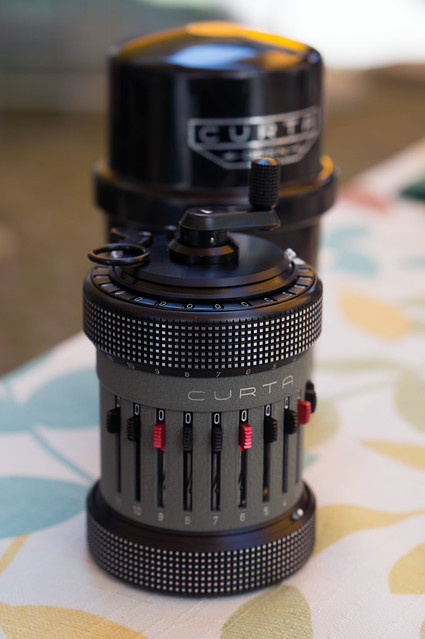
The Curta calculator first came onto my radar screen as I read William Gibson’s Pattern Recognition. – a Curta is used in a swap: calculator for decrypted info. At the time, I was working at a boarding school in central NH; when I mentioned this odd calculator to a math teacher, he said, offhandedly, “Oh, I know about those! In fact I think there’s one up in the attic.” We searched, but no joy. So I’ve yet to see one in person but that has not stopped me from coveting.

Type II Curta

Curta Type II

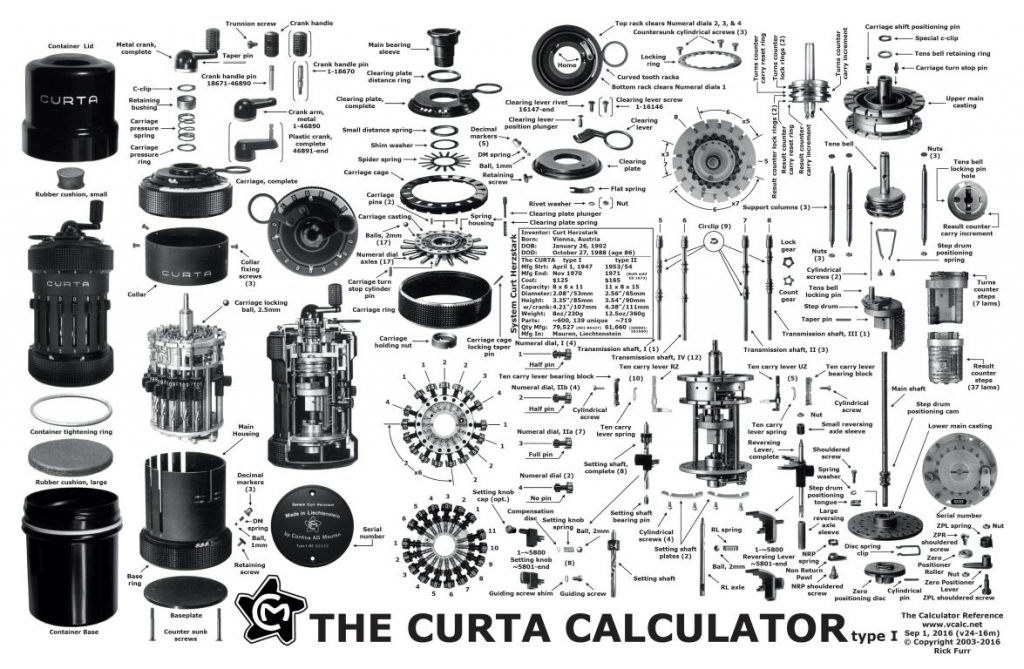
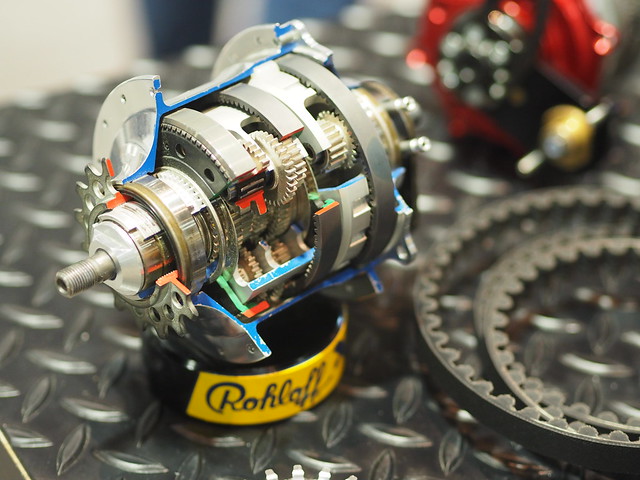
Parts and a look inside

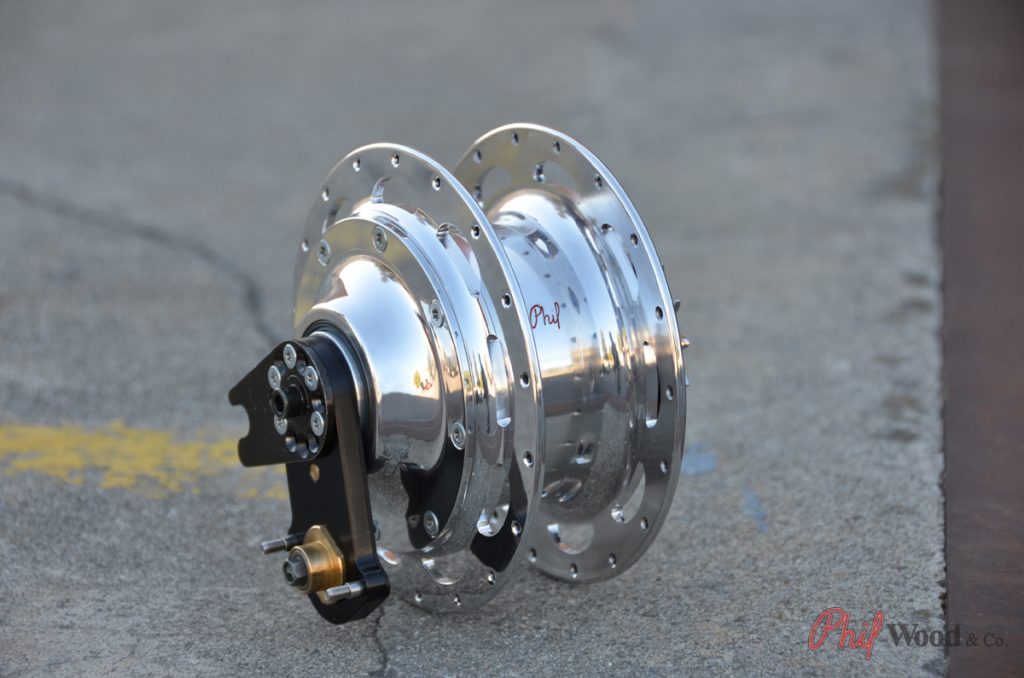
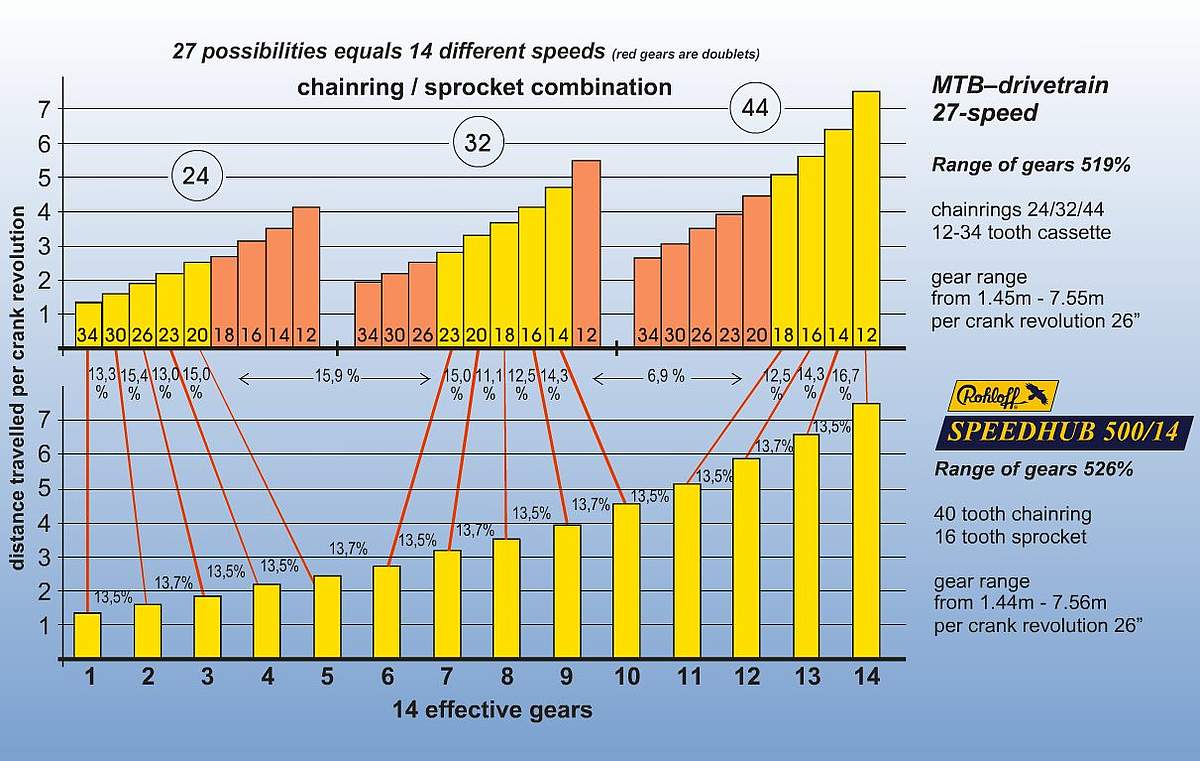
I’m sure you saw the match coming a mile away – the second cool cylinder is the Rohloff Speedhub. Beautiful. intricate, robust and functional (it’s 14 speeds are evenly stepped – something that other internally geared hubs can’t pull off) – what’s not to love? Oh, yeah, as mentioned below, the price. Throwing caution to the wind and setting another wad of cash on fire, the ‘before’ Rohloff photo is an example with a Phil Wood hub shell. I have no idea how much the Phil shell would add to the price, but omg it’s lovely.

The Phil shell gives you spoke count options – the std Rohloff is 32 spoke drilling only

Speedhub

A repeat from the Ordinary post – Rohloff cutaway from my trip to NAHBS

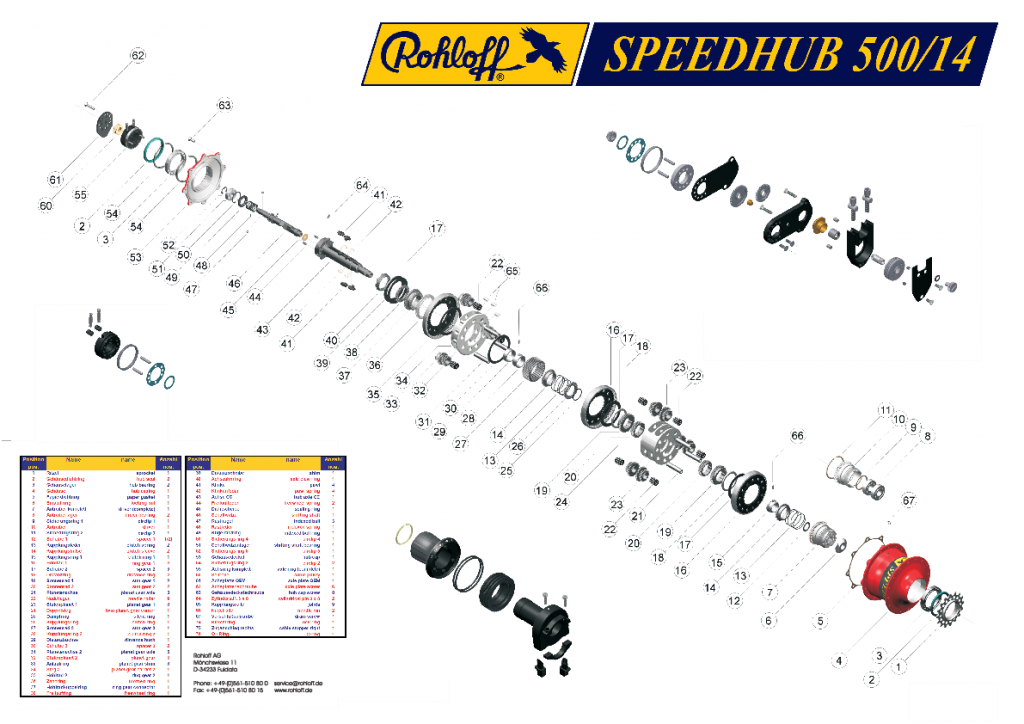
And a very exploded view!

My current ‘one bike to rule them all’ fantasy starts with a Speedhub-equipped Tumbleweed Prospector frame, 27.5 Plus tires, a big basket up front for teckels, a big saddlebag in back and some sort of trailer for hauling beehives around exurban Quebec. A boy can dream… And if I went that route, I guess I’d have to budget in the money to eBay myself a Curta as well!