wunderkammer


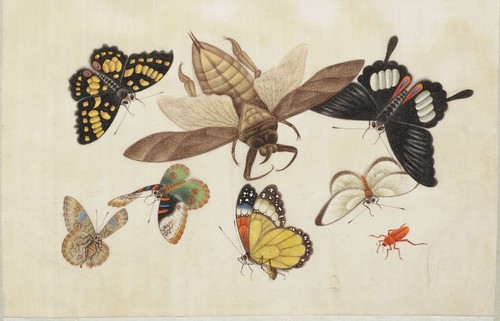
First, let me acknowledge peacay as undisputed champion of Internet cool-stuff-finding. Today’s Butterfly Album post is a multi-dimensional winner. First, there are the images. I’m particularly partial to a painting containing what I think is a Giant Water Bug:

*

Then there’s the intriguing info on where the insects were collected:

The only other information known is that the butterflies and insects were collected from the Aralia (spikenard) and related Tetrapanax papyrifera (pith paper tree) plant species.

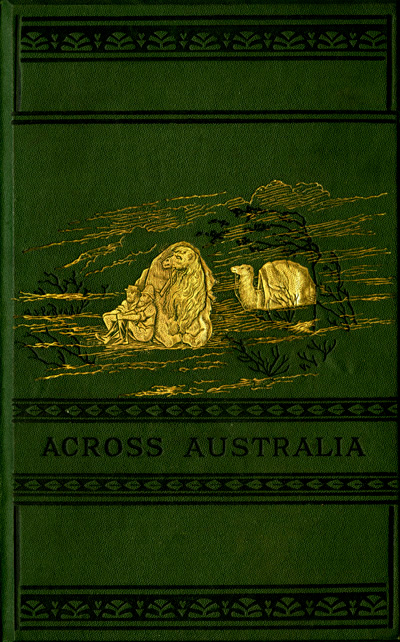
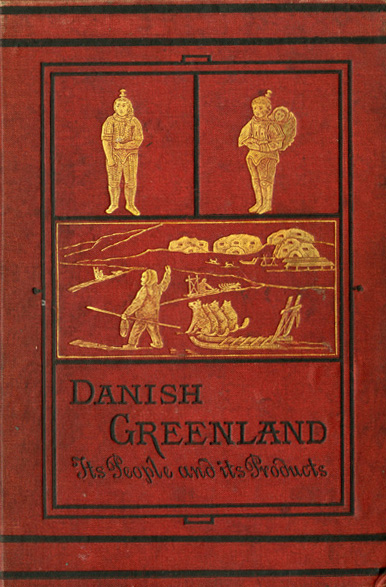
Followed by a link to the Harvard Herbarium for more info on the pith paper tree. The Herbarium rates a big marker pin on my mental map – it’s close, houses the Blaschka’s glass plant models and – most important for me – was the base of operations for Richard Evans Schultes (prev. posts here and here). I’ve wandered around the Herbarium website before, but today – thanks to peacay – I kicked around the Botany Library On-Line Exhibits (not sure I’ve ever happened upon this part of the site before). There’s a nice series on book covers/bindings:

*

*

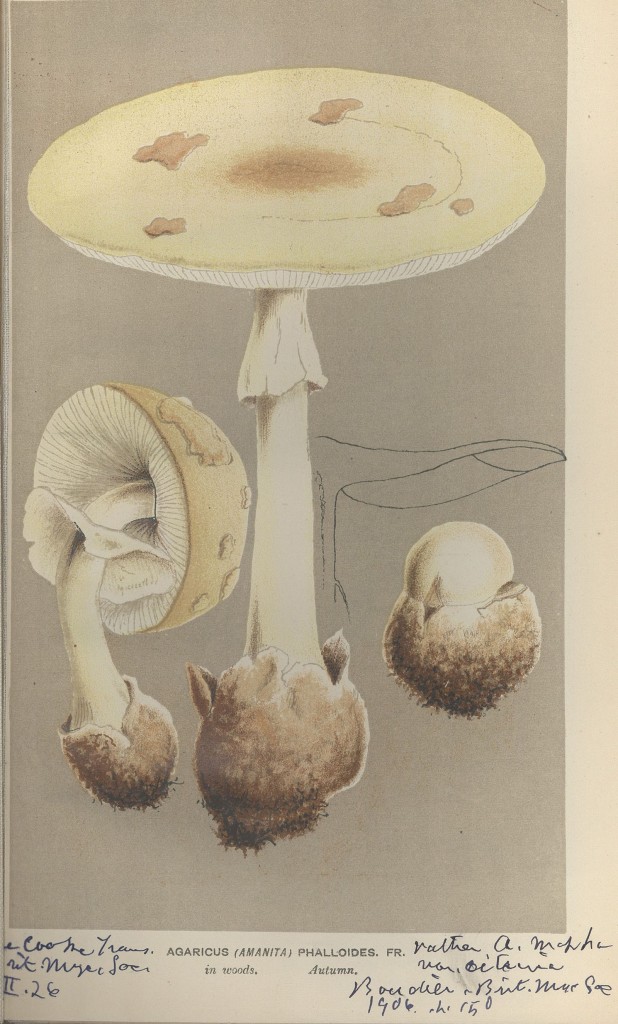
a section on the ‘other’ Amanita (phalloides)

*

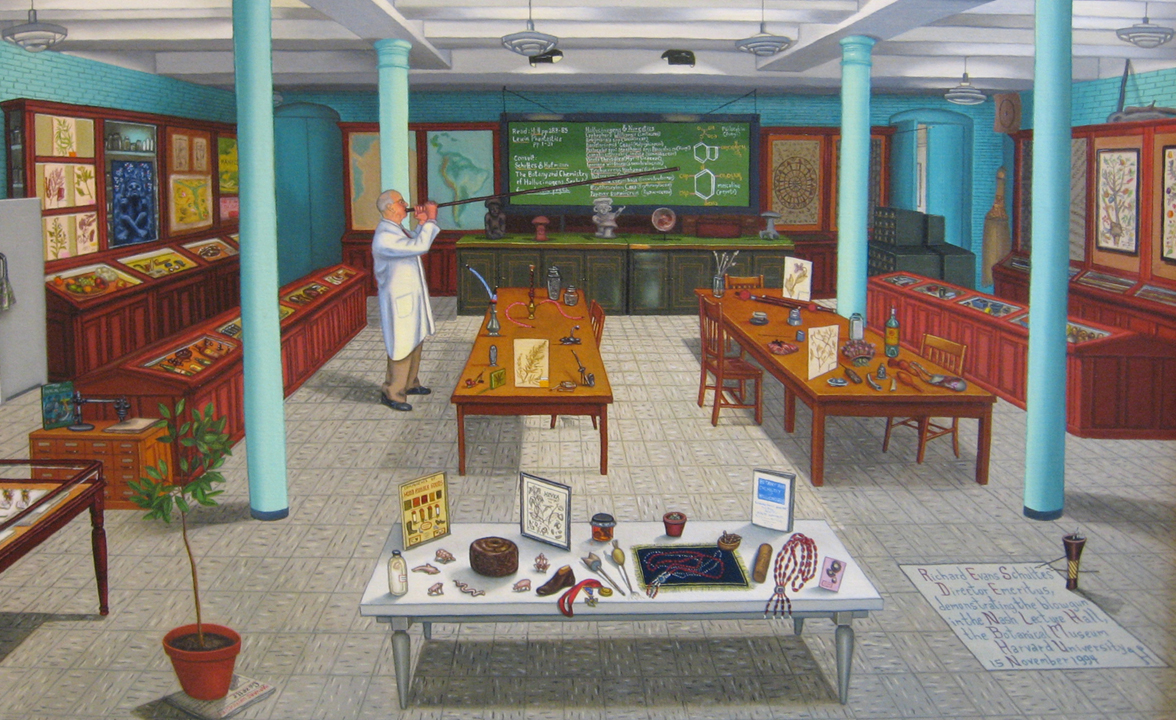
and then there’s this, from the Economic Botany Clipping File:

Dr. Schultes teaching in the Nash Lecture Hall

Painting by Hannah Barrett, November 1994

The caption in the tiles says, “Richard Evans Schultes, Director Emeritus, demonstrating the blowgun in the Nash Lecture Hall, the Botanical Museum, Harvard University, 15 November 1994.” Ethnobotanical explorer in lab coat? Check. Blowgun, darts and quiver? Check. Little potted cactus ($100 says Lophophora williamsii)? Check. More interesting details that I’ll leave for you, the reader? Check. I’m curious as to what molecule is diagrammed on the chalkboard…

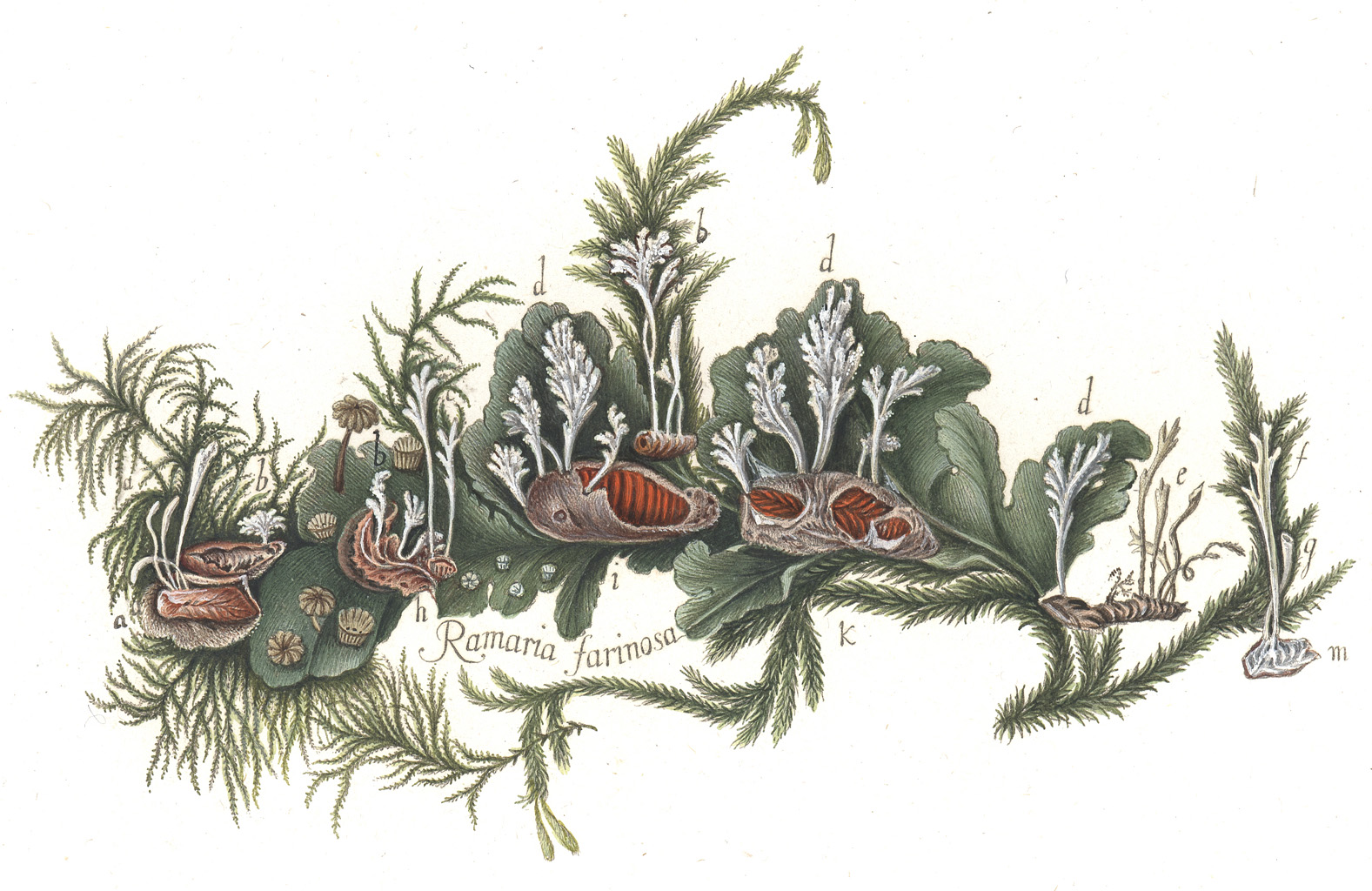
One last picture to end the post – from the book Beata Ruris Otia Fungis Danicis Impensa. Enjoy!

“You got AR on my wunderkammer!” “Your wunderkammer is all up in my AR!” All together, now – “Om, nom, nom.”

The video demo of AR tech:

The AR page is here (the AR app requires a printed image and a webcam).

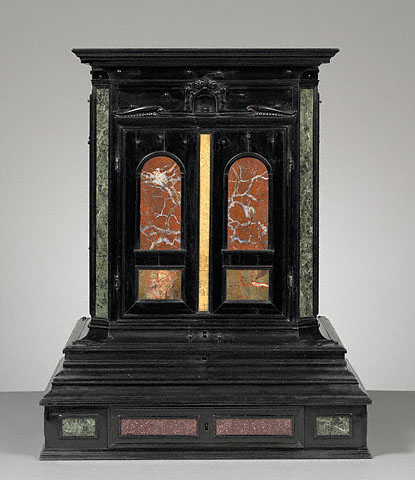
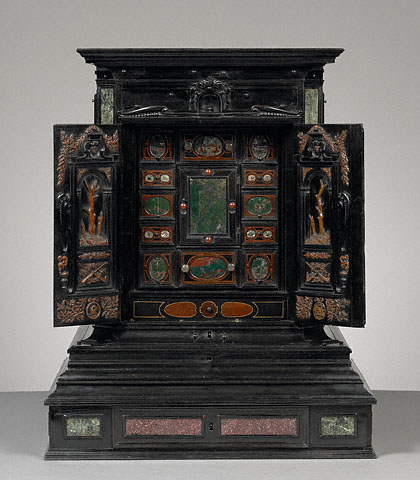
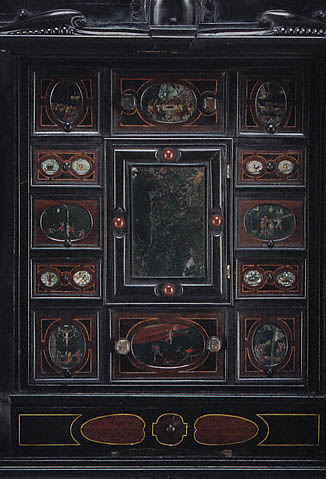
The Augsburg Cabinet minisite is here.

*

*

*

Via Super Punch.

Via HH’s blog, the Library of Congress’ Prokudin-Gorskii Photographic Record collection. I’ll let Hollister tell the tale:

on the eve of the first world war and the Russian Revolution, photographer Sergei Mikhailovich Prokudin-Gorskii talked Nicholas into backing his plan to capture the Russian Empire on digichrome glass plates. Between 1909-1912, and again in 1915, he completed surveys of eleven regions, traveling in a specially equipped railroad car provided by the Ministry of Transportation.

Well worth searching/browsing for a while; it makes me want to pull out my copy of Arseniev.

-

I wonder what the graffiti says? Also, looks like a Turkman ak öý or gara öý  – the Central Asian version of the ger – to me.


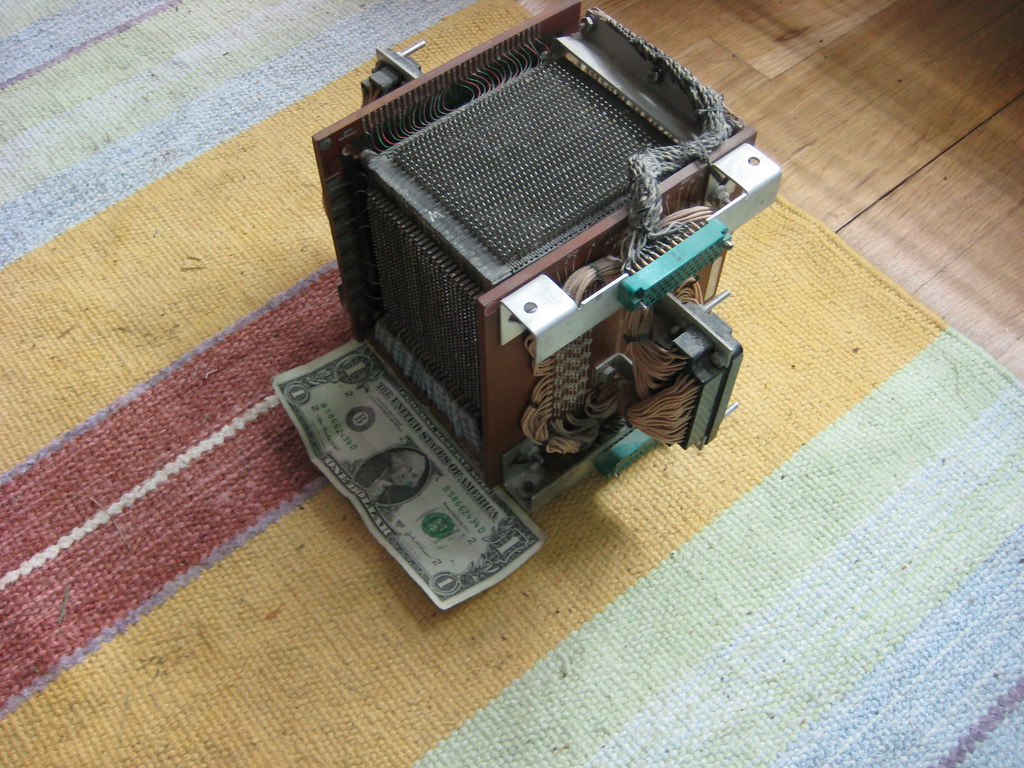
I don’t think I’ve ever posted pictures of this little cutie from my trash treasure collection. It’s 8k of magnetic core memory from a GE-235 (I think) digital info processing unit – warning – 235 link is to a pdf, but a worthwhile one. If you open the pdf, check the disk drive in the upper right of page two. It’s footprint was roughly the size of a chest freezer and it had big@ss pneumatic hoses that actuated the arms carrying the heads. Also check the printer control panel on page four – I have just the panel itself in the basement, waiting for me to get inspired.

This is why core dumps are (or were) so named – little donuts, one per bit.

*

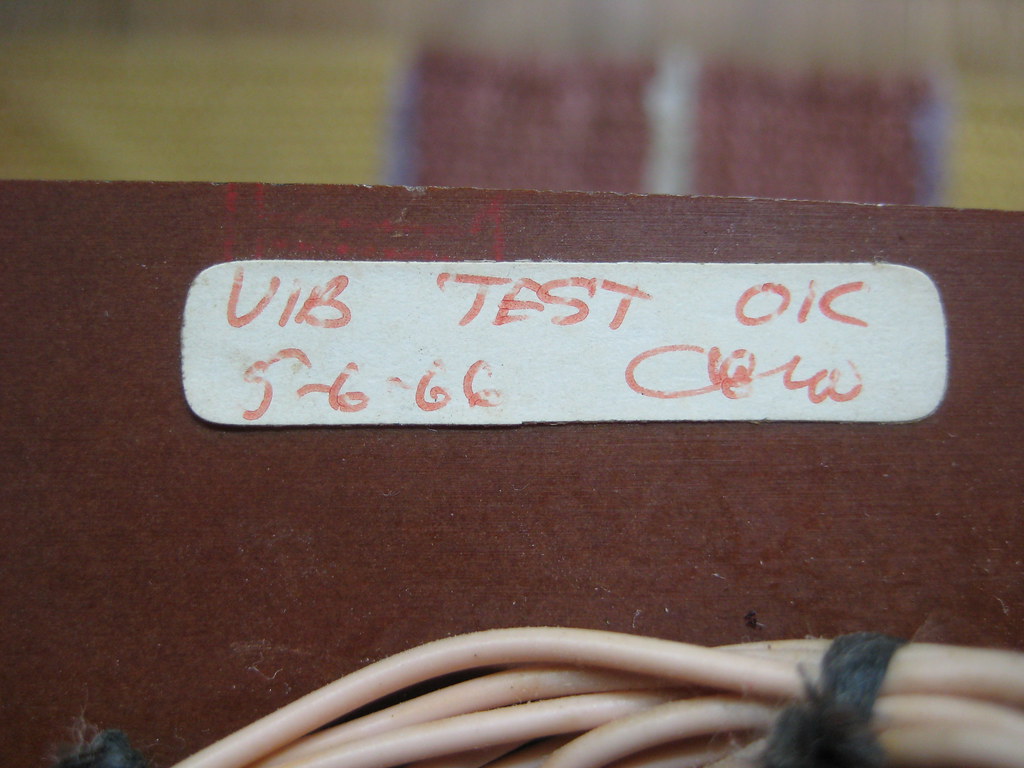
They weren’t exactly mass producing these back in 1966.

*

The nameplate:

*

And click here for a ‘did he really say it’ regarding the post’s title.

A week or so ago, I heard through the grapevine that the Shark Girl had been free diving with a group of Spotted Dolphins when a pod of Bottlenose Dolphins swept in and sexually aggressed the hell out of the smaller Spotteds (I’m deliberately not using the word I heard when we were talking about it – rape). I was, initially, really disturbed by the story – Flipper? John Lilly’s buddies? Thanks for all the fish? Rapists? WTF? My emotional reaction remains, but intellectually the story made me reflect on anthropomorphism and how little of the interior lives of other animals we understand. I have little doubt that inter-species aggression is not a good thing for the victim and perceiving it as a good thing would be profoundly maladaptive – beyond that, I’m not sure what to think. It sure wouldn’t be the first time that interspecies sex was used to express dominance – that foo-foo dog humping your leg is not in love with your shoes – the message is something else entirely.

With all this percolating in my head, I came across the work of Isabel Samaras in Juxtapoz. Her latest exhibition is called “Into the Woodz”:

I guess the theme is “Woodland Fabulous”!  When I started with the paintings of Goldilocks and Baby Bear I wanted to put in some nice solid visual clues so you’d know who they were without having to be told — there’s a bowl a porridge, some “Just Right” brand oats, and I gave Baby a big gold dookie rope necklace with a gold nameplate that said “BABY” on it.

I had been doing all these animal drawings in my sketchbook and had given some of them necklaces made from gold foil chocolate wrappers.

It suited him so well that I added a gold tooth with a diamond chip and a bling ring and Goldy got some huge gold doorknocker earrings.  I started pulling out old records I had from the 80s – Rob Base & D.J. E-Z Rock, EPMD, Salt-n-Pepa, Derek B, Kool Moe Dee, Sweet Tee and RunDMC.  Next thing I knew I was painting a porcupine with gold “love/hate” rings and a bunch of mockingbirds having a rap war sitting on a big boom box.

Mocking Box (The Rap Wars)
mocking_box

[I chose this one because I've heard of some urban mockingbirds greeting the dawn by imitating car alarms - life = art.  Dr. H]

*

The next piece was set deep among the trees and I just never left.  I became one of the girls who didn’t come out of the woods!  And I started to wonder ‘who else might be in there’?  Forests are wonderfully mysterious places—if you go to an intensely old one with massive moss covered trees you really do half expect to see a party of dwarves marching along or odd things springing out at you. They’re magical places.

In this case the animals are a bit “urbanized”—they’ve come into contact with human culture and taken a few things back into the woods with them. *

Some wonderful grist for my “we see our reflection in everything” mill. I don’t think it was specifically her intent (that’s why art doesn’t come with an instruction sheet), but the image of a squirrel with a rope and a gold nut really makes concrete for me the way stories and myth make animals avatars of certain human characteristics – for dolphins, the intelligent and peaceful  older brother. On a slight tangent, the painting on Isabel’s book calls another favorite artist to mind.
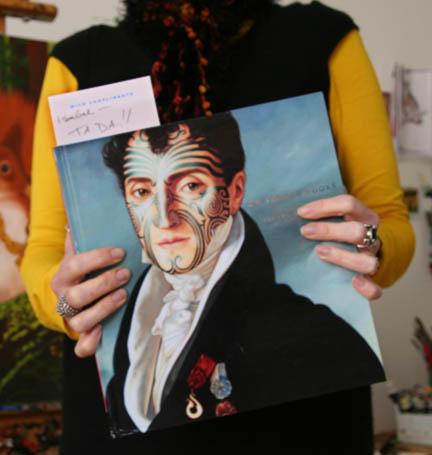
isabelbook

*

For folks who want more, Ms. Samaras has a blog and – as noted – a book.

-+-

When my Netvibes feed from Bibliodyssey popped up a new post with the title “A Cabinet of Natural Curiosities“, I couldn’t click over to Peacay’s place fast enough. In amongst the monitors and birds of paradise was this fellow:

*

The birds look reasonable and I recognise the Flying Dragon, but I think Albertus Seba may have gotten a feejee mermaid style gaff as well – I’m not sure there are any Revelation lizards crawling/squirming/dragging around – but I could be wrong. That hasn’t stopped folks from rendering the Beast in Lego (h/t Tom B.).

*

Let’s see… From delphine rape to the Whore of Babylon in Lego. Yep, that about covers it.
Down to Cambridge yesterday, to take in Rosamond Purcell’s Egg and Nest (pdf link) show at the HMNH, kick around a bit and attend Janet Browne’s lecture on ‘Darwin at 200′. Egg and Nest is stunning – incredible photographs beautifully hung. If you’re in the area – GO!

*

*

After you’ve taken in the Purcell show, there’s all the rest of the HMNH to wander around in – the Sea Creatures in Glass will be on display until March 1 – time’s getting short.

*

I took along some party favors for the post-lecture get together – a big thank you to Leighton Jones at Floating Point Digital Images for getting said favors to me as quickly as he did.

An FYI for folks in the northeast – this is going to be good.

Owl Eggs (c) Rosamond Purcell

The Harvard Museum of Natural History opens a new exhibition Egg & Nest: Photographs by Rosamond Purcell on February 12th, 2009. World-renowned photographer Rosamond Purcell’s photographs of exquisitely elegant eggs and remarkable nests present an artist’s view of natural history. Egg & Nest will be on display only through March 15th.

In her artist statement in the exhibition Purcell states, “Visually nothing could be more different than an egg and a nest. The first is always perfect, no matter what the outer variations in shape; an egg is endless, irreducible. A nest, on the other hand is an artifact assembled by beak and claw, often messy, but always adapted to the needs of the next generation of birds. ” *

(2/9) Promoted from comments – Denise lets us know that, ” There’s a slide show of a number of the book’s images at the Harvard University Press website: http://www.hup.harvard.edu/features/puregg/“. Also, Curious Expeditions posted a review of Egg and Nest at almost the same time as I put this post up – great minds and all that!

D & M over at Curious Expeditions are finalists in the 2008 Weblog Awards (Best Travel Blog category). You can vote here. Gaffs and skulls and bezoars, oh my!

If anyone else – blogrolled or otherwise – is on the Weblog Award list, sing out. There’s a bunch in the right margin that should be…

Another slide show from the Harvard Museum of Natural History!

More sets from the Harvard Museum of Natural History. The Hall of Mammals was my favorite room – classic in both layout and contents. There were other exhibits that were better, educationally and aesthetically, but taken as a whole this room took the prize.

*

Mammal set here.

The Hall of Mammals also contained a lot bird mounts, as did the South American Animals room. There was a wall of hummingbird mounts in the South American room – I managed to capture this bit of iridescence:

*

Bird set here.

Created in the late 1800s and early 1900s by Leopold (father) and Rudolph (son) Blaschka. They are amazingly realistic and beautiful pieces of work. I hesitate to call them art, only because they are intended to be neutral – an as accurate as possible representation of the subject – but they are certainly and example of craftsmanship of the first water.

*

Again – apologies for the quality of some of the pictures. Next time I visit the museum I’ll do a better job, I promise (Brian – thanks for the suggestion).

Back in 2001, William Saturno found the San Bartolo murals.

When archaeologist William Saturno went to Guatemala six years ago, nothing worked out the way he planned. None of the local guides could take him to see the carved monuments he wanted to research, leaving him with nothing to do.

“Not being particularly good at sitting around and twiddling my thumbs,” Saturno says, he decided to investigate a rumor that three hieroglyphic Maya monuments had been uncovered by looters in the jungle nearby.

According to the map, Saturno and his guides could reach the monument site by driving forty kilometers and then trekking on foot through the jungle. At the beginning of the road that would take them to the site, however, Saturno’s team encountered a sign that read “Camino en mal estado.” The sign itself was falling apart, Saturno says. “That should have been an indication of what we were in for.”

After an arduous, twenty-two-hour journey, the group finally arrived at the San Bartolo site, which wasn’t the one they were looking for. Exhausted and dehydrated, Saturno ducked into a looter’s trench to escape the oppressive heat. “I shone my flashlight up on the wall,” he says, “and there was the mural.” *

I’ve heard him describe the trip and apparently “exhausted and dehydrated” is an understatement.

One of the Peabody Museum’s current exhibits is “Storied Walls: Murals of the Americas“; two walls of one room are devoted to the San Bartolo murals. There are some photos of the murals, but what held my interest were the 2 digital scan+watercolor recreations by Heather Hurst. Absolutely amazing – religious sequential art.

I’m going to post a couple thumbnails here, but no slide show. If you’de like to see more, please click through to my Flickrset – I’ve annotated some of the picture and all of them ought to be seen BIG.

Bloodletting was an important ritual practice. Stingray spines were used: women – tongues, men – foreskins (at least that’s what the plaque said – looks a little far back to me).

*

*

NPR’s Talk of the Nation on San Bartolo here. I have a video tour of the site stashed somehere – if I find it, I’ll post a link.

UpdateVideo here. You may have to download and play it locally – it played fine for me under Windows using VLC.

Next Page »